
You are using an out of date browser. It may not display this or other websites correctly.
You should upgrade or use an alternative browser.
You should upgrade or use an alternative browser.
Iran-Israeli Conflict Thread
- Thread starter LaAguilaNegra
- Start date

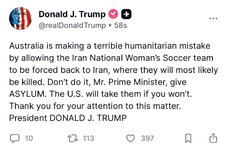
A few days ago the female Iranian national women's team refused to sing the national anthem as a sign of protest against the Mullahs. Tehran has since labeled them wartime traitors and obviously so it's not safe for them to return to Iran. Australia has since been unclear whether it would grant these women asylum, Trump has since stepped in and offered the women's football team asylum in the US.

This sentence contradicts itself. If an investigation is needed to provide further clarity on whether it was an intentional strike on a school, you cannot possibly know for sure that it was an accident.The Tomahawk strike on the Minab girls school was an accident, mistakes happen in wartime and the ongoing investigation will clarify things in due time.
Trump and Hegseth have both said that they believe Iran carried out the bombing.

A few days ago the female Iranian national women's team refused to sing the national anthem as a sign of protest against the Mullahs. Tehran has since labeled them wartime traitors and obviously so it's not safe for them to return to Iran. Australia has since been unclear whether it would grant these women asylum, Trump has since stepped in and offered the women's football team asylum in the US.
View attachment 27902
Sort of goes with the belief that the same kind of troublemakers in the west are the ones causing trouble in Iran. The same social outcast/weirdos who want to join with the satanic elites and overthrow tradition and family for shiny objects and consumption.

How is having data that is at least 10 years old and wrong, leading to an action that kills children, and further galvanises the Iranians many of whom are supposedly on your side, an accident?The Tomahawk strike on the Minab girls school was an accident, mistakes happen in wartime and the ongoing investigation will clarify things in due time. Most likely the compound was targeted due to outdated data, the school building used to be part of an IRGC compound (until 2016 when it was fenced off) and most of the students were children of IRGC naval personnel that worked on the bases nearby .
That's criminally negligent at best, and knowing the US intelligent apparatus, it's highly unlikely.
If you want to replace the current government with a neutral or allied one, doing things that will upset even the Iranians that want US intervention is shockingly inept.
It's no wonder Trump was angry. He's been made to look foolish, had his operation that he already didn't want soaked in the blood of children, and made boots on the ground all but certain in a single strike.
This has Mossad all over it. Or perhaps the CIA. They have a lot of leftists for obvious reasons.
Solid move by Trump. Australia has been the epitome of scum and decay for a while now.
Yay Trump, bring in more liberal anti-male female voters.Solid move by Trump. Australia has been the epitome of scum and decay for a while now.

Keith Woods on the Iran War.
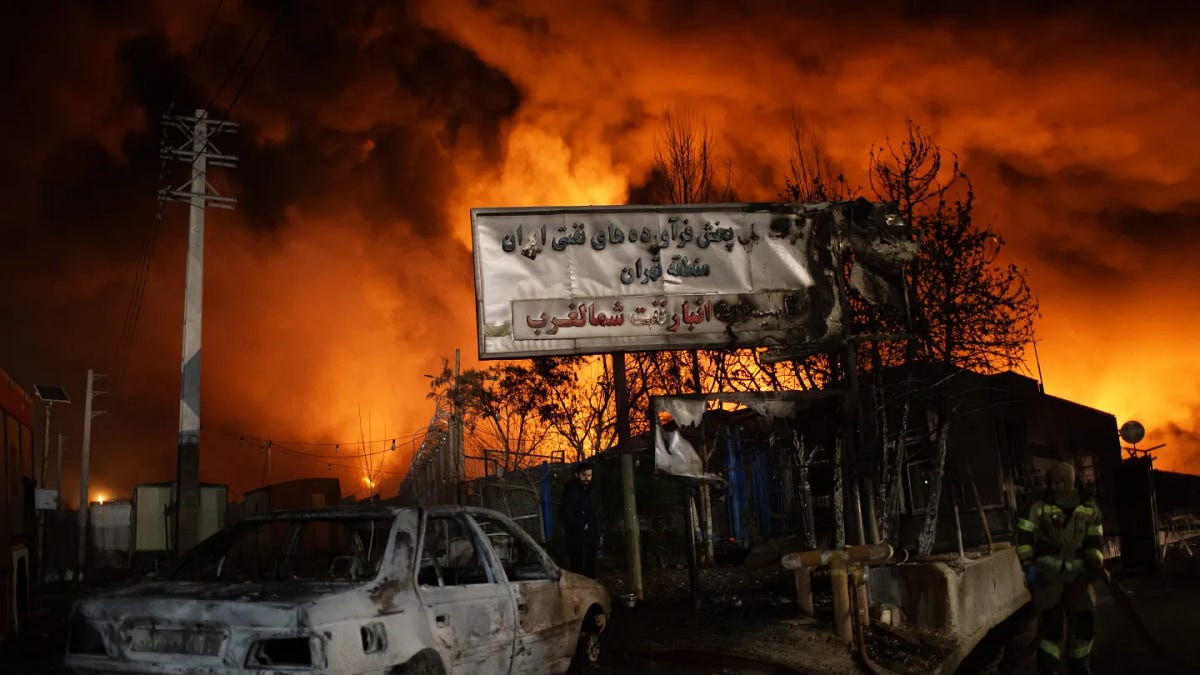
It is now 10 days since the beginning of ‘Operation Epic Fury,’ launched during the Jewish celebration of Purim. I think we can now conclude this looks like one of the worst thought-out military operations in recent memory.
* There is still no sign of major domestic unrest in Iran. The figures like 30,000 dead protesters were always unbelievable, but whatever hopes liberal reformers had before the strikes, the actual outcome of the strikes on Iranian politics has been to put a more hardline faction in charge and galvanise the country against a state that opened the war bombing an elementary school which killed 160+ children.
* There is likely no military means by which the US can keep the Strait of Hormuz open. Even with American/Israeli air dominance, it cannot destroy Iranian drone production faster than Iran can sustain or rebuild it. According to Western estimates, Shahed drones are already produced in the thousands per month, and the best analysis of this I have seen based on recent battlefield evidence concludes it would be many months before drone production becomes degraded enough to protect the Strait.
* Many of Iran’s drones are already produced at dual-use plants and they can repurpose other civilian plants. There is probably no way America can eliminate this threat enough to secure the Strait without a ground invasion. People are waving this away by pointing to America’s air power, but Nazi Germany reached its peak production of airplanes in 1944 while the country was under relentless bombardment.
* Iran still possesses hundreds of cruise and anti-ship missiles designed specifically to target vessels in the Strait of Hormuz, many deployed on mobile launchers along the coast. Even with air superiority, suppressing a dispersed arsenal like that without a ground campaign would be extremely difficult.
* Oil markets are now pricing in the risk of prolonged disruption, and if the Strait of Hormuz remains closed this could become the largest supply shock in modern history. Every Western economy is already on the brink, with little room left to manoeuvre on debt or interest rates.
* Aside from oil, the Strait closing gives the world a major disruption in fertiliser exports; and nearly half the world’s sulfur which is used for extracting phosphate for fertilizer, as well as copper and uranium extraction. This means that a long disruption could cascade into semiconductor and data-centre supply chains.
* The US is spending about >$1.4 billion a day on this war, with Iran now in control of a civilizational choke point maintained by $20,000 drones.
* Rather than give the Iranians an easy off-ramp Trump has demanded UNCONDITIONAL SURRENDER, treated all regime politicians and heads of state as legitimate targets for assassination, and made it clear any negotiations conducted by America/Israel will be done in bad faith.
It’s hard to see how America comes away with anything like a victory from this. Trump resisted an Iran war throughout his first term because of his fear about the knock-on effects on oil, but it seems the success of the Venezuela action has led to hubris.
One thing about Trump though, whether on tariffs or Greenland, he has always been willing to reverse course when markets got spooked. At this point I think the most likely outcome is the mother of all TACOs with Trump declaring total victory and rapidly de-escalating. But Israel is absolutely committed to at least a month’s long war with Iran, and all America can offer Iran is a return to the same unstable status quo that makes an eventual resumption of war inevitable. Even if Trump decides he wants an off-ramp, he has fundamentally changed the structure of the conflict. The likely result is that Iran re-establishes deterrence across the Gulf, which will be hard to read as anything but a strategic defeat for the United States.
 substack.com
It is now 10 days since the beginning of ‘Operation Epic Fury,’ launched during the Jewish celebration of Purim. I think we can now conclude this looks like one of the worst thought-out military operations in recent memory.
* There is still no sign of major domestic unrest in Iran. The figures like 30,000 dead protesters were always unbelievable, but whatever hopes liberal reformers had before the strikes, the actual outcome of the strikes on Iranian politics has been to put a more hardline faction in charge and galvanise the country against a state that opened the war bombing an elementary school which killed 160+ children.
* There is likely no military means by which the US can keep the Strait of Hormuz open. Even with American/Israeli air dominance, it cannot destroy Iranian drone production faster than Iran can sustain or rebuild it. According to Western estimates, Shahed drones are already produced in the thousands per month, and the best analysis of this I have seen based on recent battlefield evidence concludes it would be many months before drone production becomes degraded enough to protect the Strait.
* Many of Iran’s drones are already produced at dual-use plants and they can repurpose other civilian plants. There is probably no way America can eliminate this threat enough to secure the Strait without a ground invasion. People are waving this away by pointing to America’s air power, but Nazi Germany reached its peak production of airplanes in 1944 while the country was under relentless bombardment.
* Iran still possesses hundreds of cruise and anti-ship missiles designed specifically to target vessels in the Strait of Hormuz, many deployed on mobile launchers along the coast. Even with air superiority, suppressing a dispersed arsenal like that without a ground campaign would be extremely difficult.
* Oil markets are now pricing in the risk of prolonged disruption, and if the Strait of Hormuz remains closed this could become the largest supply shock in modern history. Every Western economy is already on the brink, with little room left to manoeuvre on debt or interest rates.
* Aside from oil, the Strait closing gives the world a major disruption in fertiliser exports; and nearly half the world’s sulfur which is used for extracting phosphate for fertilizer, as well as copper and uranium extraction. This means that a long disruption could cascade into semiconductor and data-centre supply chains.
* The US is spending about >$1.4 billion a day on this war, with Iran now in control of a civilizational choke point maintained by $20,000 drones.
* Rather than give the Iranians an easy off-ramp Trump has demanded UNCONDITIONAL SURRENDER, treated all regime politicians and heads of state as legitimate targets for assassination, and made it clear any negotiations conducted by America/Israel will be done in bad faith.
It’s hard to see how America comes away with anything like a victory from this. Trump resisted an Iran war throughout his first term because of his fear about the knock-on effects on oil, but it seems the success of the Venezuela action has led to hubris.
One thing about Trump though, whether on tariffs or Greenland, he has always been willing to reverse course when markets got spooked. At this point I think the most likely outcome is the mother of all TACOs with Trump declaring total victory and rapidly de-escalating. But Israel is absolutely committed to at least a month’s long war with Iran, and all America can offer Iran is a return to the same unstable status quo that makes an eventual resumption of war inevitable. Even if Trump decides he wants an off-ramp, he has fundamentally changed the structure of the conflict. The likely result is that Iran re-establishes deterrence across the Gulf, which will be hard to read as anything but a strategic defeat for the United States.
Operation Epic Fury looks like an Epic Failure
It is not 10 days since the beginning of ‘Operation Epic Fury,’ launched during the Jewish celebration of Purim. I think we can now conclude that this is starting to look like one of the worst thought-out military operations in recent memory.
substack.com
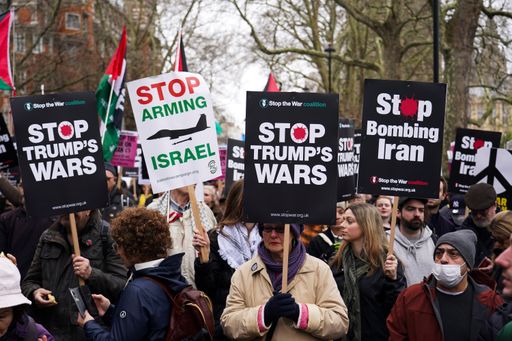
Israel preparing for at least month-long war with Iran: Report
 www.trtworld.com
TRT World - Israel preparing for at least month-long war with Iran: Report
Israeli military’s leadership has raised the level of readiness across various combat branches, says official
www.trtworld.com
European nations are likely releasing their strategic oil reserves to bring the price down. This will only work for a short time, until those reserves are used up. It has been reported in the media that they were due to meet to discuss this move.Oil price is falling again. Shows that either someone knows something we don't, or that the markets are massively underestimating the situation.
Talk about hubris. This is delusional. Does he not recall how a few years ago MBS reacted to President Biden trying to scold him over the murder of Khashoggi? I very much doubt that Graham's message will be persuasive, but instead will likely backfire.Lindsey Graham threatens Saudi Arabia with 'consequences' if it does not overtly enter the war against Iran.
I asked Grok about the potential for Israel to nuke Iran and it puts it at about 5%. I wonder how that might change over the next few weeks.
Unlikely to happen. Iran is fighting a slow-burn war to create months of economic agony for the West. They will not want to do anything that could be used to justify the use of nukes. There will always be a very small chance that the US and Israel do something completely crazy with a nuke.I asked Grok about the potential for Israel to nuke Iran and it puts it at about 5%. I wonder how that might change over the next few weeks.

Yes, you can never know if anyone on the Israeli or American side is nuts enoug to use a nuke. It does seem unlikey to me too. For one reason, you can get more or less the same effect with thermobaric and incendiary weapons and for some reason normies don't find that nearly as troubling. Whenever I hear someone go on and on about Hiroshima and Nagasaki while never having even heard of the firebombing of Tokyo, I know I'm talking to a normie who buys the mainstream narative about WW2 hook, line, and sinker.Unlikely to happen. Iran is fighting a slow-burn war to create months of economic agony for the West. They will not want to do anything that could be used to justify the use of nukes. There will always be a very small chance that the US and Israel do something completely crazy with a nuke.
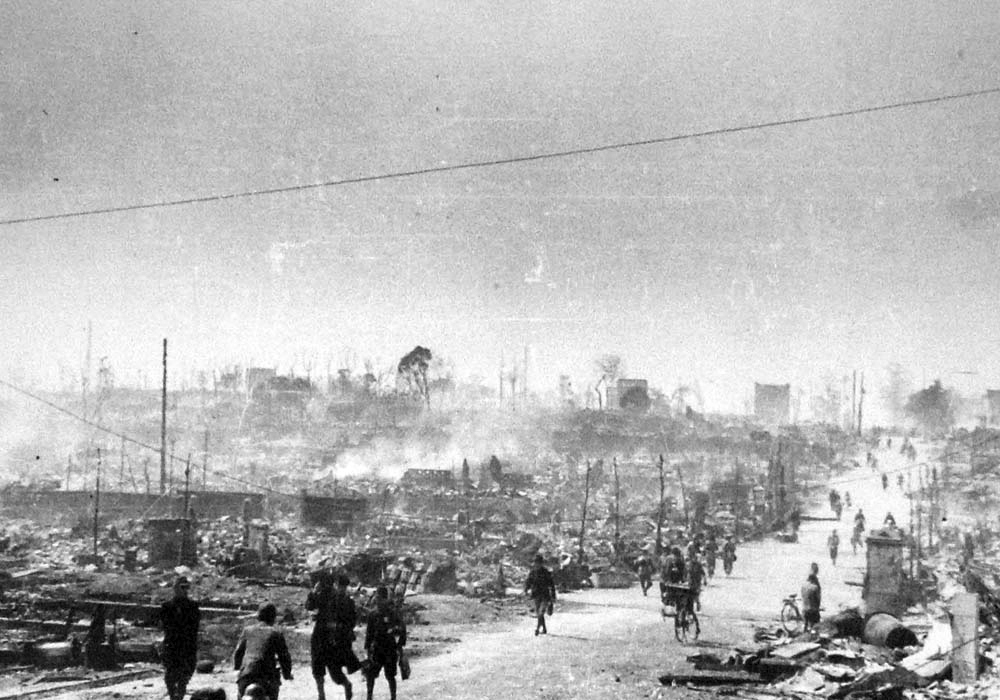
Bombing of Tokyo (10 March 1945) - Wikipedia

The US may have started to attack Iranian oil tankers in the gulf. Unconfirmed.
I
I don't see anything - no maritime security incidents reported today. So far.
US bombing of a vessel, perhaps a tanker, at Bander Lengeh.
Update:
It's an Iranian warship - another (2nd visually confirmed) Soleimani-class corvette.

In that regard, please be cautious about what targets you select. Our goal is to liberate the Iranian people in a fashion that does not cripple their chance to start a new and better life when this regime collapses. The oil economy of Iran will be essential to that endeavor.
They dont want oil infrastructure destroyed.
Going back to the intentional/accidental argument for the girls school strike. As has been posted already, according to Reuters, it was a double-tap strike, 40 minutes apart. I don't know US military targeting protocols, but have we seen any US double-taps on Iranian military targets?
It is my impression that they often get used by Israel on human targets because there will be a lot of bystanders, relatives and emergency services desperately trying to dig victims out of the rubble.
Would the US use a double-tap on a military target, and if so, what would justify it? I think the administration knows that there is no justification, and this has led to the blaming of Iran rather than admitting responsibility.
It is my impression that they often get used by Israel on human targets because there will be a lot of bystanders, relatives and emergency services desperately trying to dig victims out of the rubble.
Would the US use a double-tap on a military target, and if so, what would justify it? I think the administration knows that there is no justification, and this has led to the blaming of Iran rather than admitting responsibility.
Last edited:
The Tomahawk strike on the Minab girls school was an accident, mistakes happen in wartime and the ongoing investigation will clarify things in due time. Most likely the compound was targeted due to outdated data, the school building used to be part of an IRGC compound (until 2016 when it was fenced off) and most of the students were children of IRGC naval personnel that worked on the bases nearby .
What wasn't an accident though was the IRGC's decision build a school on one of their military bases, and then fencing it off and technically turn the base within stone's throw from one of their military bases. That's either stupidity or a deliberate attempt at mixing up civilian and military infrastructure and judging by the MidEast's habit to turn schools, hospitals, mosques and kindergartens into military hubs it could very well be the latter.
What's also not an accident is the current deluge of tragedy propaganda related to this incident. The school bombing happened over a week ago already, and wasn't much of an issue in the immediate aftermath. Suddenly it's everywhere. A possible explanation: due to rising energy prices and Tehran's decision to hold the world hostage through energy blockade a deflectionary narrative was build up. In this case that's the 'bloodthirsty US childkillers level Iranian school for fun'.
There are civilian facilities on the grounds of US military bases, both at home and abroad, including schools.

About DoDEA Schools for Military Children | Military OneSource
Department of Defense Education Activity (DoDEA) schools give free education to active-duty MilKids, pre-k to grade 12. View eligibility requirements.
 www.militaryonesource.mil
That Iranian girl school wasn't opened "yesterday". It was known, and should have been taken into account when planing the strikes - tomahawk missiles have a CEP (Circular Error Probable, call it a margin of error) of up to 10m, so none of them should have been launched at coordinates located closer than that, from the school. Unless wrong intel was given.