DIY Car Maintenance

Amazing. I am always in admiration of guys that can do that kind of deduction.

Also, a great example of "simplest answer is usually the right one"
What's also interesting to me is the mechanic who didn't even look under the car when a problem was reported, excessive heat, that had to be coming from the engine or exhaust system. He took like an hour out of his day to drive around with me, so it wasn't that he refused to spend the time.

Reminds me of the scene from Sling Blade where the retard finds the problem with the lawnmower, which is also reminiscent of the video mountainaire posted about the old Camaro not running right because the gas had deteriorated. Simplest things first.

 
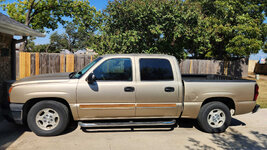
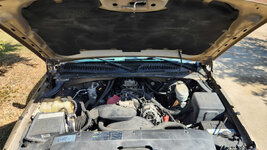
I began changing the knock sensor in the 2004 Chevy Silverado 1500 with 176,000 miles. While I'm there, I'm also going to change the spark plugs, wires and oil sensor, which has been stuck at the highest reading for years. All of this is in hopes of being able to pass emissions and keep the truck in good running order.

Currently, the only code that would prevent passing emissions is the P0332 Knock/Combustion Vibration Sensor 2 Circuit Low Bank 2. This BlueDriver scanner can simulate an emissions test and it also says that the truck's EVAP has not fully self-tested, which was one of the codes that I cleared last week. I've driven it about 100 miles since then, so I'm not sure how long it will take in order to know if there's a problem with the EVAP, but that's not a difficult fix if it's needed.

1760723608664.jpeg

I'm following this video step-by-step that was made by BlueDriver, the company who made my code scanner. They also provide a written guide with a list of the required tools.


20251016_131759.jpg


From the BlueDriver Silverado Playlist said:
Knock Sensor – 1999-2006 Chevy Silverado

Required Tools
• 8mm, 10mm, & 22mm sockets
• Socket wrench
• Flat head screwdriver
• 3/8 inch extensions
• Vice grips
• Hose clamp pliers
• Torque wrench
• Rags
• Fuel line release tool 3/8"

General Repair Steps
1. Open the main Fuse Box (located under the hood on the driver’s side).
2. Using the guide on the underside of the cover, locate and remove the Fuel Pump Fuse.
3. Start the engine and wait for it to stall.
4. Using a screwdriver (or pick), press the pin inside the fuel valve (located under the engine cover on the passenger side), and release any remaining fuel onto a rag.
5. Loosen 8mm bolt on top of Engine Cover, and remove cover.
6. Loosen 8mm bolts on hose clamps at either end of Outlet Ducting.
7. Remove the Radiator Hose and Throttle Body Coolant Lines from the clips on the bottom of the Outlet Ducting.
8. Remove the Outlet Ducting and put it aside.
9. Optional: Use hose clamps (or a vice grip with a rag around it) to pinch off the coolant line running into the Throttle Body.
10. Loosen the hose clamps on the coolant lines running into the Throttle Body and remove the lines (put down a rag first to catch any spilling coolant).
11. Remove the connector from the side of the Throttle Body.
12. Remove the hose from the rear of the Throttle Body.
13. Loosen the three 10mm bolts on the plastic cover on top of the intake near the cab, and then remove the cover.
14. Using some compressed air, blow some air around the base of the Intake Manifold, where it meets the block. This is to ensure no debris gets into the engine when the manifold is removed.
15. Unplug all eight Fuel Injectors (four on each side of the manifold).
16. Loosen all ten 8mm bolts on the Intake Manifold, and remove them.
17. Unplug the MAP sensor at the top rear of the Intake Manifold.
18. Disconnect the two clips hold down the Wiring Harness that runs over top of the manifold.
19. Unplug the Alternator, EVAP line, and EVAP connector.
20. Remove the 10mm nut from the Wiring Harness clamp on top of the manifold near the Throttle Body, and then push the wiring harness to the side.
21. Loosen the hose clamp on the Vacuum Line running to the Brake Booster, and then remove the hose.
22. Unplug the PCV line (on top of the manifold about midway back).
23. Unplug the Knock Sensor, and then remove the sensor clip from the Intake Manifold.
24. Using a fuel line release tool, remove the Fuel Line (located on the driver’s side of the manifold) from the manifold. Put a rag underneath the Fuel Line to catch any remaining fuel.
25. Take the EVAP line, run it back under the Fuel Line, and then push it to the side.
26. Remove the Intake Manifold from the engine bay (keeping an eye out for any leaking coolant or fuel)
27. Stuff some rags into the top of the eight Intake Ports to ensure nothing falls into them.
28. Pull up on the rubber plug above the Knock Sensor, and unplug the Knock Sensor connector. There are two Knock Sensors; you may want to replace both at the same time.
29. Using a 22mm socket, loosen and remove the Knock Sensor(s).
30. Screw the new Knock Sensor(s) in by hand.
31. Torque the Knock Sensor(s) to 15 foot-pounds.
32. Replace the Knock Sensor connector(s) and plug(s).
33. Remove the rags from the Intake Ports (being careful nothing falls into them).
34. Clean the intake mating surface.
35. Optional (but recommended by Chevrolet): replace Intake Manifold Gaskets.
36. Put the Intake Manifold back into place.
37. Put some Loctite 242 (Blue, medium strength) on the threads of all ten 8mm manifold bolts, and then put the bolts into place finger tight.
38. Torque the 8mm bolts following the order shown below. This is a two stage process. First round, torque the bolts to 44 inch-pounds, second round, torque to 89 inch-pounds.
39. Pull EVAP line under Fuel Line and back into place, and reconnect it.
40. Reconnect PCV hose.
41. Reconnect Vacuum Line to Break Booster.
42. Plug the EVAP connector and Alternator connector back in.
43. Put the Wiring Harness back into place, and secure the clamp using the 10mm nut.
44. Close both clips on the Wiring Harness.
45. Put the Knock Sensor connector back into place, and plug it in.
46. Reconnect the MAP sensor.
47. Plug all eight Fuel Injectors back in (tabs face toward rear on driver’s side, and toward the front on the passenger side).
48. Replace the cover near the top rear of the manifold, and tighten the three 10mm bolts.
49. Reconnect the Fuel Line (making sure to replace the metal clip that secures it to the manifold side).
50. Reconnect the hose on the rear of the Throttle Body.
51. Plug in the Throttle Body connector.
52. Reconnect the Throttle Body coolant line.
53. Put the Outlet Ducting back into place, and reconnect the Throttle Body coolant line and Radiator Hose to the underside of the Outlet Ducting.
54. Slide the Outlet Ducting back onto the Throttle Body and Mass Airflow Sensor.
55. Tighten the 10mm bolts on the Outlet Ducting hose clamps.
56. Replace the engine cover, and tighten the 8mm bolt at the top.

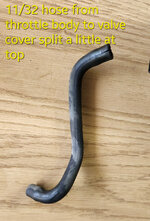
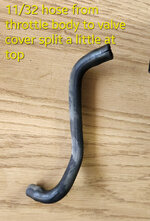
Removing the intake manifold was a lot of little things, but nothing more difficult than prying old hoses off their fittings and unclipping tough to access fuel injector connectors. I ran into an 11/32" hose that cracked at one end. I'm going to replace it either now or maybe later since it's easily accessible. I hate to spend the money for a dealer part so I could just use generic hose that isn't shaped perfectly.

20251016_150016.jpg

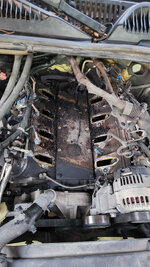
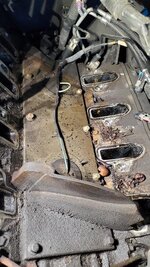
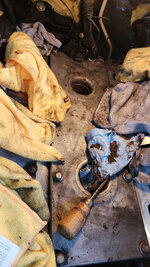
I discovered that underneath the intake manifold it was quite dirty, including a lot of mouse shit. The truck used to live in the country, but it was driven pretty much every day, so I'm a little surprised there's so much in there. Now it lives in the city so, after cleaning that area, I don't expect this to happen again.

20251016_184505.jpg

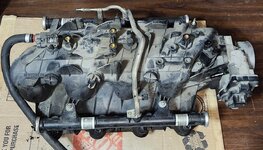
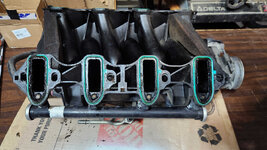
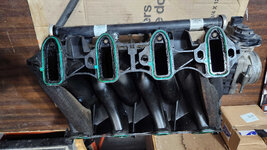
Not my truck but a 2002 Suburban intake that I found online. It's also kind of dirty, but not as bad as mine, picture below:

1760722709712.jpeg

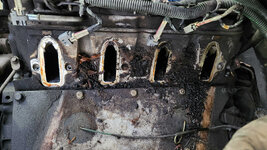
Passenger bank on my 2004 Chevy Silverado, picture below:

20251016_184512.jpg

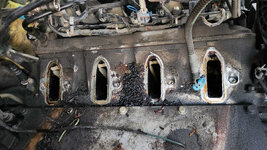
Driver side bank on my 2004 Chevy Silverado, picture below:

20251016_184517.jpg

I'm changing both knock sensors at $53 each from Rock Auto (dealer price is $135 each) even though there's only a code for one of the sensors/banks. Considering the length of this job and the age of the truck, I thought it made sense to do both now.

20251016_185526.jpg

I'll replace the intake manifold gaskets for $43 ($154 from the dealer with no extra pieces or $84 for the ACDelco part at Rock Auto), which is an after market kit that includes fuel injector O-rings.

20251016_185616.jpg

20251016_185628.jpg
 
^ Truck looks in good shape, those are worth keeping.

Be careful with that mess on the engine and the exposed intake ports. Some of the intake valves will be open, you don't want that crud falling into a cylinder. I'd vacuum it up with a shop vac, and plug the ports with shop towels before doing anything else.

Now is also a good time to clean the sludge out of the throttle body, and intake manifold, and making sure the pcv system is good.
 
^ Truck looks in good shape, those are worth keeping.

Be careful with that mess on the engine and the exposed intake ports. Some of the intake valves will be open, you don't want that crud falling into a cylinder. I'd vacuum it up with a shop vac, and plug the ports with shop towels before doing anything else.

Now is also a good time to clean the sludge out of the throttle body, and intake manifold, and making sure the pcv system is good.
Thankfully, the step-by-step video gave me the exact same advice, so I plugged the intakes with fresh shop towels, vacuumed the big stuff, and have been scrubbing the smaller stuff today.

Also been cleaning the intake manifold in preparation for the new seals. It wasn't that dirty at all, just a little dusty on top and a little grease around the seals.

Thanks for the tip on the PCV; I hadn't thought about blowing that out.

Do you suggest I remove the throttle body or just clean it while it's bolted onto the intake manifold? I think I'd probably change the throttle body gasket if I removed it, which is only around $10 after market.
 
This seems like the appropriate spot...

Anyone ever get a Technical Service Bulletin (TSB) issue covered when the vehicle is out of warranty ? And if so, how did you approach the service department to get that done ?

I bought a new car in 2021. 6 year/72K mile warranty. Mileage is well over the 72K, more than twice as much. I've taken the vehicle to the dealer during the warranty, specifically for two issues covered under recall. I also regularly use their on-site instant oil change at the appropriate intervals. The dealer can see all the maintenence history in their system.

The vehicle started acting up and throwing codes about a week and a half ago. The codes pointed me toward a potential MAF sensor issue, a battery issue, and a couple of other codes related to those. Being out of warranty, I was ready to tackle this myself. But a new replacement battery and new MAF sensor didn't change those issues. And a test of the 'hot wire' (ignition on) at the MAF's vehicle side connector is 10.2 volts (when it should be 12 volts). So I sat down and started chasing wiring problems.

During a deep dive on the internet, I found two TSBs, one for a wiring harness issue, the other for a ground issue. The TSBs were released in March and July of 2022. Those TSB dates fall between the first and second recall visits to the dealer. It's a limited run of VINs, but my vehicle falls under those parameters (verified by the applicable VIN letter and the RPO Codes). The codes listed in the TSBs are synonymous with the codes on my vehicle. So any work done in relation to either of the TSBs back when the TSBs came out would have been covered by the warranty.

My thought process is that, at the appointment for the second recall issue, the TSB issues should have been addressed. And there's no mention of any harness inspection or ground wire inspection on any of the paperwork for the second recall issue or any subsequent paperwork.

I have an appointment at the dealer this coming week. The wiring harness is just shy of $500. And while all the signs and codes point to the wiring harness, I'm hesitant to buy it online if it ends up not being the issue. It could end up being the ground wire issue. Both jobs are less than an hour. Book time for the harness replacement is 0.3 hours, or 18 minutes, ground issue is 0.5 hours/30 minutes. That said, the parts that need to be removed to make these repairs are out of my comfort range. A large part of that is due to a lack of availability of a 'walkthrough' diagram or even a YouTube video.

Before the pile on regarding why I go to the dealer... other than the two recall issues, the vehicle has been very good to me. While the dealer's oil change prices are a hair higher than the competitive rates, my logic behind that is, by my paying that hair more at the dealer, there's only two 'people' working on this car. Myself, and the dealer. And this way there's also a record of oil change intervals. Granted, I may reassess all that if I need a repair that's out of my expertise and the dealer is significantly higher than an independent shop. But for right now, simply put, there's no wiggle room on the dealer's end that "the other place must have messed that up". I had that sort of thing happen back when I bought a used car, and that dealer was dodging responsibility like Neo. But that's another story for another time...

As far as the current TSB issue, I'd like to make my case for having the harness replaced at no cost to me.

If the dealer balks at that, my second suggestion would be to have the dealer pay for the harness and I would pay the labor.

Any ideas or suggestions for approaching the dealer would be appreciated.
 
I'm sorry brother I don't have specific help to offer but I'll tell you my story about a 2003 Sierra with the rare side steps. I bought it knowing it was sought after thinking to fix it up and sell it, it was lit up like a Christmas tree but every mechanic on the planet had experience with that 5.3L plus there was more than you can count at every local junkyard it should be cheap to fix....right?

That thing KILLED me, I chased code after code after code for months. I spent night after night in my warehouse doing what I could and never got anywhere, I went to half a dozen different mechanics who gave unlimited reasons for all the codes with all
the confidence in the world they could fix them and still couldn't get it right. By the end I was just replacing part after part after part and once I got one thing sorted a new thing would just pop up, anything electrical and pretty much anything rubber on that truck I swear was designed to fail and the thing would throw codes and run poorly if you looked at it the wrong way. Which is crazy because I know they are actually reliable trucks, I swear they are, I think it was just Michigan that ate it alive and im sure you could say the same for Canada. Either that or everyone who still drives one just drives the hell out of it and doesn't care about the issues, I think that one is what it is because it still ran and went down the road it just was never right. It felt like every single thing failed on the truck and needed to be replaced other than the engine itself.

I punted it on the next guy who was all too happy I'm sure thinking the same thing I was thinking when I bought it, rare truck easy fix "sucker".

My advice.....trucks hold their value so it's still worth something. Sell it and move on if it's at all feasibly possible.
Although you had a Sierra, according to this guy, there were 5 years of Silverados that were the worst, including mine, the 2004, which he rates as the second worse, although we've had none of the problems he mentions.

 
Finished the knock sensors on the 2004 Chevy Silverado 1500 with the 5.3L V-8. I was interrupted by some work and paused for a couple of weeks, but I finally finished the knock sensors and a couple of other things.

Knock sensors, head.jpg

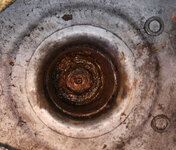
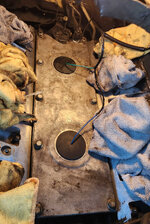
The rear knock sensor well was full of muddy water and the metal was severely pitted, which is probably why it wasn't working.

Knock sensor muddy well.jpg

Took a while to clean it all out and get the new sensors put in. Had to buy a new sensor harness since the connector on the muddy well was in pretty bad shape and it seems likely that somehow that sensor's rubber stopper must have failed, although it looked and felt good.

Knock sensors installed.jpg

My family member had been bribing some Mexican for the past 10 years to pass an inspection while countless other hole-in-the-wall Mexican shops had failed to fix this during that time, but changing the knock sensors was all it took. Next day I got the emissions inspection completed for the normal $20 instead of the bribed $160 they'd been paying every year.

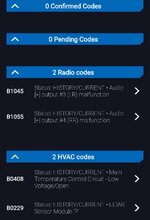
The check engine light is gone and all of the previous codes: misfire, knock, EVAP and transmission stayed away since I cleared them, except for the air conditioner, which is faulty, and also for the stereo system, which I haven't checked into yet. I'm planning to tackle the A/C next.

It's interesting that the previous transmission shift solenoid code did not come back and the slight slippage going from first to second also stopped. Amazin'!

20251204 Silverad codes.jpg
 
While I was working on the knock sensors, I also changed the spark plugs. The manual showed the truck originally came with iridium, but they've been discontinued by GM, although there was a dealership in Indianapolis that could have sold me 8 of them at only $24 each, so I went with some Denso's at around $7 each from RockAuto. I also replaced the wires with OEM Delco.

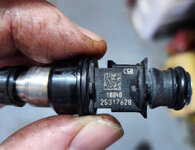
As recommended, I changed the intake manifold gaskets after cleaning all the surfaces very well. The gaskets came with new fuel injector O-rings, so I changed those as well.

fuel injector O-ring.jpg

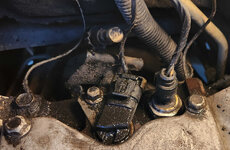
The truck's oil pressure sensor had been pegged at maximum reading and never moved for ages, so I changed that. I went with an OEM Delco sensor from RockAuto that was around $50. With the intake manifold removed, it was very easy to do, but you can also manage with the intake in place. Works great now, reading a little over 40 psi right in the middle of the gauge.

Oil pressure sensor area.jpg

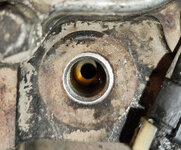
The oil pressure sensor is the round connector pointing straight up on the right side. You have to have a special deep well oil pressure sensor socket with rounded edges that costs about $12. I guess they do this so you don't damage it with a shallow socket. Since I have a normal socket of the correct size that's plenty deep, I watched several videos and searched for anyone who had found a workaround, but in the end I sprung for the special socket. Oil pressure sensor well shown below.

Oil pressure sensor well.jpg

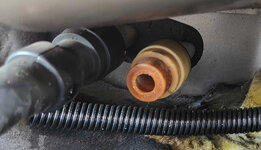
This is an old truck so, when you get into any kind of job like this, you don't know what you'll find. I barely touched one of the heater hoses close to the firewall and a plastic connector snapped off.

Heater hose with broken quick connect.jpg

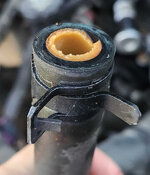
For some of the years these trucks were made, GM used a plastic quick connector for the hose-to-heater core and, after checking online, I found that they all snap like this when the truck gets old. It's actually fortunate that it broke while I was doing this maintenance since it was easy to repair.

Heater core quick connect.jpg

Had to buy a special quick connect release for $10 and a new stainless quick connector for $30 in order to replace the broken plastic one.

One of the eight fuel injector electrical connectors had its release tab break and of course it was the one that's the most difficult to access at the back of the engine.

fuel injector connector side.jpg

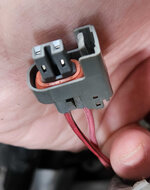
The OEM injector connector is only carried by GM and they wanted too much, so I bought a Dorman brand for almost $50, snipped the old one off and crimp connected the new one, which then snapped safely into place. Seems to work fine since I have no misfires.

Fuel injector connectors comparison.jpg

I also changed the oil and filter and, because I lost some coolant during the repair, I added more back in and am now thinking I'll test the coolant to see if it actually needs to be flushed.

So the truck is running well and totally legal, with no codes and good performance. I'll keep an eye on the codes and check the mileage to see how well it's running, but there are no obvious signs of any problems.

I did find this job challenging because I haven't done anything buy oil changes in decades. Whenever I ran into a problem I really wasn't sure how to proceed, so I went to Youtube university and also called my brother to get his opinion.

In the end, it was nothing too complicated or difficult, just a lot of steps and I'm looking forward to doing some other basic maintenance on my vehicles, like brake pads and struts.
 
While I was working on the knock sensors, I also changed the spark plugs. The manual showed the truck originally came with iridium, but they've been discontinued by GM, although there was a dealership in Indianapolis that could have sold me 8 of them at only $24 each, so I went with some Denso's at around $7 each from RockAuto. I also replaced the wires with OEM Delco.

As recommended, I changed the intake manifold gaskets after cleaning all the surfaces very well. The gaskets came with new fuel injector O-rings, so I changed those as well.

View attachment 25920

The truck's oil pressure sensor had been pegged at maximum reading and never moved for ages, so I changed that. I went with an OEM Delco sensor from RockAuto that was around $50. With the intake manifold removed, it was very easy to do, but you can also manage with the intake in place. Works great now, reading a little over 40 psi right in the middle of the gauge.

View attachment 25921

The oil pressure sensor is the round connector pointing straight up on the right side. You have to have a special deep well oil pressure sensor socket with rounded edges that costs about $12. I guess they do this so you don't damage it with a shallow socket. Since I have a normal socket of the correct size that's plenty deep, I watched several videos and searched for anyone who had found a workaround, but in the end I sprung for the special socket. Oil pressure sensor well shown below.

View attachment 25922

This is an old truck so, when you get into any kind of job like this, you don't know what you'll find. I barely touched one of the heater hoses close to the firewall and a plastic connector snapped off.

View attachment 25923

For some of the years these trucks were made, GM used a plastic quick connector for the hose-to-heater core and, after checking online, I found that they all snap like this when the truck gets old. It's actually fortunate that it broke while I was doing this maintenance since it was easy to repair.

View attachment 25924

Had to buy a special quick connect release for $10 and a new stainless quick connector for $30 in order to replace the broken plastic one.

One of the eight fuel injector electrical connectors had its release tab break and of course it was the one that's the most difficult to access at the back of the engine.

View attachment 25925

The OEM injector connector is only carried by GM and they wanted too much, so I bought a Dorman brand for almost $50, snipped the old one off and crimp connected the new one, which then snapped safely into place. Seems to work fine since I have no misfires.

View attachment 25926

I also changed the oil and filter and, because I lost some coolant during the repair, I added more back in and am now thinking I'll test the coolant to see if it actually needs to be flushed.

So the truck is running well and totally legal, with no codes and good performance. I'll keep an eye on the codes and check the mileage to see how well it's running, but there are no obvious signs of any problems.

I did find this job challenging because I haven't done anything buy oil changes in decades. Whenever I ran into a problem I really wasn't sure how to proceed, so I went to Youtube university and also called my brother to get his opinion.

In the end, it was nothing too complicated or difficult, just a lot of steps and I'm looking forward to doing some other basic maintenance on my vehicles, like brake pads and struts.
Great job! You started with a lot of problems and the truck was running poorly, and now they're all fixed and the truck is running good. Very impressive for a learn as you go effort like this!
 
Great job! You started with a lot of problems and the truck was running poorly, and now they're all fixed and the truck is running good. Very impressive for a learn as you go effort like this!
Thanks! It's wonderful to have so many online resources in order to help solve problems. I was at first really concerned when that heater hose connector snapped because I thought it meant that the heater core would have to be replaced, which I know is a lengthy job that usually requires taking out the dashboard, and sometimes even more, but it was actually a very easy $40 fix.
 
20251016_150016.jpg

It turned out that this PVC hose has different diameters at each end and the dealer wanted $125 for it, while I found another place that only wanted $87. Since the problem with the hose was just partial fraying at one end and its function is not super critical, I did not replace it.

I probably would have spent up to $30 for a new one but, if it gets worse, I'll just cut the frayed section off.
 
While I was working on the knock sensors, I also changed the spark plugs. The manual showed the truck originally came with iridium, but they've been discontinued by GM, although there was a dealership in Indianapolis that could have sold me 8 of them at only $24 each, so I went with some Denso's at around $7 each from RockAuto. I also replaced the wires with OEM Delco.

As recommended, I changed the intake manifold gaskets after cleaning all the surfaces very well. The gaskets came with new fuel injector O-rings, so I changed those as well.

View attachment 25920

The truck's oil pressure sensor had been pegged at maximum reading and never moved for ages, so I changed that. I went with an OEM Delco sensor from RockAuto that was around $50. With the intake manifold removed, it was very easy to do, but you can also manage with the intake in place. Works great now, reading a little over 40 psi right in the middle of the gauge.

View attachment 25921

The oil pressure sensor is the round connector pointing straight up on the right side. You have to have a special deep well oil pressure sensor socket with rounded edges that costs about $12. I guess they do this so you don't damage it with a shallow socket. Since I have a normal socket of the correct size that's plenty deep, I watched several videos and searched for anyone who had found a workaround, but in the end I sprung for the special socket. Oil pressure sensor well shown below.

View attachment 25922

This is an old truck so, when you get into any kind of job like this, you don't know what you'll find. I barely touched one of the heater hoses close to the firewall and a plastic connector snapped off.

View attachment 25923

For some of the years these trucks were made, GM used a plastic quick connector for the hose-to-heater core and, after checking online, I found that they all snap like this when the truck gets old. It's actually fortunate that it broke while I was doing this maintenance since it was easy to repair.

View attachment 25924

Had to buy a special quick connect release for $10 and a new stainless quick connector for $30 in order to replace the broken plastic one.

One of the eight fuel injector electrical connectors had its release tab break and of course it was the one that's the most difficult to access at the back of the engine.

View attachment 25925

The OEM injector connector is only carried by GM and they wanted too much, so I bought a Dorman brand for almost $50, snipped the old one off and crimp connected the new one, which then snapped safely into place. Seems to work fine since I have no misfires.

View attachment 25926

I also changed the oil and filter and, because I lost some coolant during the repair, I added more back in and am now thinking I'll test the coolant to see if it actually needs to be flushed.

So the truck is running well and totally legal, with no codes and good performance. I'll keep an eye on the codes and check the mileage to see how well it's running, but there are no obvious signs of any problems.

I did find this job challenging because I haven't done anything buy oil changes in decades. Whenever I ran into a problem I really wasn't sure how to proceed, so I went to Youtube university and also called my brother to get his opinion.

In the end, it was nothing too complicated or difficult, just a lot of steps and I'm looking forward to doing some other basic maintenance on my vehicles, like brake pads and struts.
The older the scarier the vehicle. I've replaced whole engine harnesses before due to breathing heavily on a connector and the whole thing blew away. Now when i service anything older than 2005 I add disclaimers about such things saying additional charges possible due to age of vehicle. Plastics really dont like constant heat and cold cycles. Who would have guessed.

Nice repair. A little time and determination saved you money and satisfaction was found.
 
The older the scarier the vehicle. I've replaced whole engine harnesses before due to breathing heavily on a connector and the whole thing blew away. Now when i service anything older than 2005 I add disclaimers about such things saying additional charges possible due to age of vehicle. Plastics really dont like constant heat and cold cycles. Who would have guessed.

Nice repair. A little time and determination saved you money and satisfaction was found.
Thanks! All my previous work was on 70's cars and 80's motorcycles, but now I'm finally into the 21th century.
 
I've been looking for a car for my mom for a while now, she drives very little when she goes places it's usually someone else driving. They are leasing silverados for next to nothing again like $200 a month zero down the insurance would cost more, these car manufacturers never learn, but it doesn't make much sense to lease or get her anything new she'll probably barely have 5k miles by the time the warranty is up or the lease ends....waste of money. She likes a larger vehicle, she likes to sit higher up.

So me being a glutton for punishment and having the itch again I picked a 100 series Landcruiser for her 🤦🏻‍♂️

Haha I joke but really it's perfect for her, really safe, really reliable, makes fiscal sense because it will always hold its value especially considering she barely puts miles on it, high seating position, plus I know the car well to deal with any potential issues. Got a 2007 with the vvti, awesome power but also have to deal with that damn secondary air injection system potential "Gotchya", mind you it's all of a $30 permanent fix but you have to take off the intake manifold to get to it. The other "gotchyas" on the truck are the CV axles and the steering rack but keep in mind it's a "Gotchya" for a Toyota not a German car, when I say "Gotchya" I mean a $400 steering rack and $300 cv axles not $4000 and $3000 and then it's good for another 250k miles.

So Toyota has a 25% Black Friday parts sale every year, here was my list:

Oil filters
Power steering fluid
Brake fluid
T case fluid
Diff fluid
Coolant
Radiator
Thermostat
Timing belt and water pump
Serpentine belt
T coolant pipes
Rotors all around
Pads all around
Steering rack
CV axle's
Valve cover gaskets
Exhaust flex pipe
Shocks all around

Even found a guy in fagbook who had a ARB Sahara front bumper for $500 so my mom can bump into anything she wants haha. Going to put a rear view mirror that doubles as a dash cam, essential these days, and I'll eventually tackle the outdated touch screen navigation. Not that my mom so much cares about that but just to bring up to modern, it's a bit tricky because some of the climate controls are in the stock touch screen but it can be done there are some options....that's later. Otherwise she has everything a new car would have, keep in mind 20 years ago this was the absolute cream of the crop....what else has come out since then? What auto stop start and your car telling you to keep focused on the road when you look away? Haha yea they can keep all that nanny garbage....


Lots of other small things that don't need parts, I'll do some of it myself and I have a good shop that will do the rest he's cool with me bringing my own OEM parts. Paid $8500 for the truck rust free in Michigan which was shocking and I'll probably be into about 12k when all is said and done with it ready to go another 200k miles. Plus whenever my mom is done using it the truck will still be worth what I have into it, if not more by then with the way prices on them are going.


Kinda jealous and want to just trade her my GX for it, maybe when my warranty is up we'll see 😈.

Really happy with it and I get to scratch my itch for another Landcruiser, my mom loves it the thing drives like a dream even before any of that work. I've never owned a 100 series, going from my 80 series to the 100 it's like going from a startac to an iPhone....I never knew they were that much of a difference.

Wish me luck boys!
 
Back
Top