Coop, I appreciate all the links and the detailed posts that you've provided. I'm making a detailed answer and arguing that you're making some mistakes in your take on Serpentza in particular and perhaps in regards to China critics in general. I think you're imputing motives to them—and sometimes me—when the critics are sincere and have a basis for what they say.
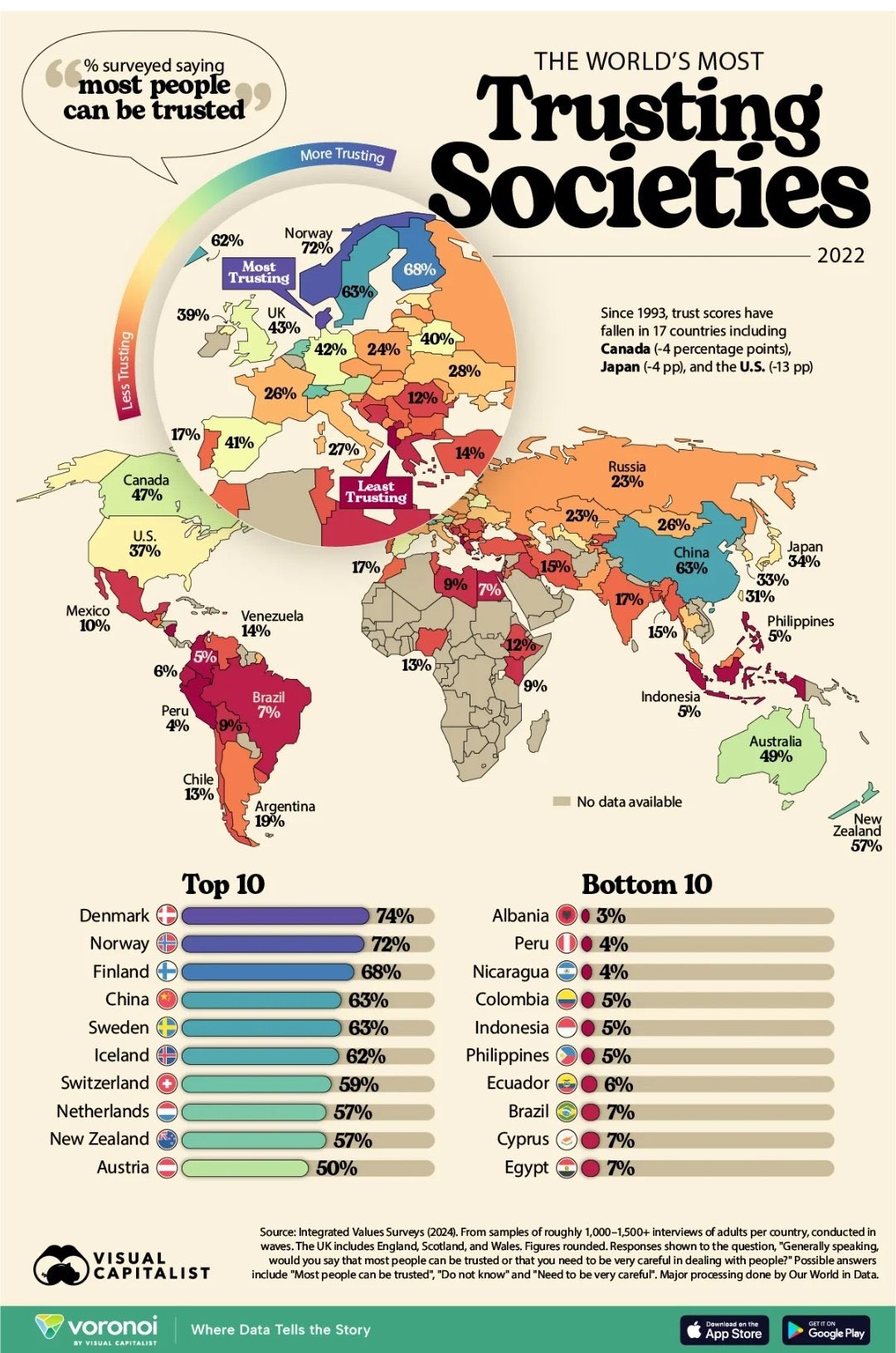
In the areas of food and package delivery that you've highlighted, I do see much higher trust now than 2018/19 when Serpentza, Laowhy86, and also I left China. Is China an overall high trust society? I don't think that follows, but it's a good topic for discussion.
Sepentza is pushing talking points that make no sense whatsoever, like China being a low-trust society today, in a country where the honor code has been the basis for unsupervised parcel deliveries, where rows of mopeds are parked with their keys left in the ignition and where women walk alone downtown late at night with no fear.
The clips on twitter have a white girl, most likely a foreign university student, marveling at unattended food deliveries outside the gates of her school. This food drop-off began with Covid out of fear because, across the world, they lied to us and said the virus could be transferred to humans through objects. That said, there is obviously a level of trust here that is good and also efficient for the delivery bike drivers.
Chinese American vlogger Carl Zha, Caltech grad who moved to SoCal after high school but still travels there regularly attributes the change towards high trust in China starting from the 2010s to the increase in the wealth levels among the populace. Another explanation I have heard is that there is a sense of joint national purpose with the average Chinese citizen feeling proud of their country developing and becoming a world leader.
In Guangzhou, which was very widely known in China as the worst large city, especially for crime, I noticed that street crime decreased beginning in 2010 in preparation for the Asian Games being held in that city. The police put notices in the paper that any crimes against foreigners would be punished by 10 year jail sentences. I noticed in 2011 that pickpockets were less common.
Surveillance and policing certainly are factors as well, but more so in the earlier stages of their society having become high trust.
In Carl Zha's video, he mentions the automated traffic tickets, which is part of the extreme surveillance in Chinese society. The cameras there are connected to a system that automatically took 3000 RMB (10 years ago, which was at least half a month's salary for people with good jobs) from your account if your car touched the white line, regardless of the circumstances.
In China, the government is incapable of proper driver training, so they do this, which is effective to a large extent, but still leaves you with a lot of completely incompetent drivers.
Serpentza made
a video about this 9 years ago and how it had been turned into a scam that cost him. TL;DR another car forced Serpentza to touch the white line and received 50 RMB for then turning him in.
All of the things that you're mentioning about high trust do not come from an honor code, but from extreme surveillance and automated enforcement. Here's an example of where this has taken them: using c
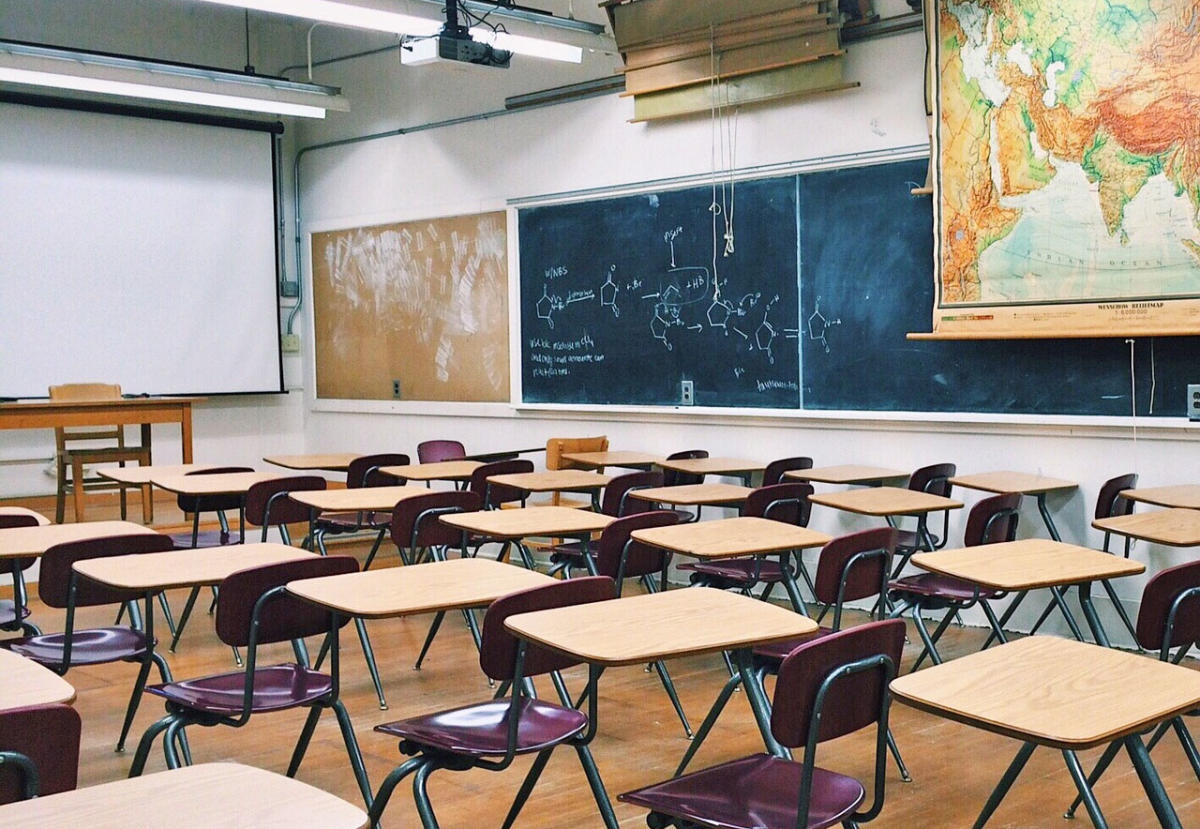
omputer surveillance in classrooms to force young students to pay attention. How do you think this will affect their character and personality long term?
Pupil tells reporters he doesn’t dare let his mind wander after technology is installed in classroom to see who is paying attention

www.scmp.com
Civilian surveillance in China has seen a boom in recent times, with facial recognition leading the charge in the technologies used to keep tabs on the population. Police are scanning travelers with facial recognition glasses, authorities are using the tech to monitor ethnic minorities -- now...

www.engadget.com
I do not not know if this became widespread in classrooms, but the automated enforcement of Covid protocols did and continues to this day where your Covid app has to be green 100% 24/7 365 and any time it changes you must report immediately for a test or to the police for quarantine.
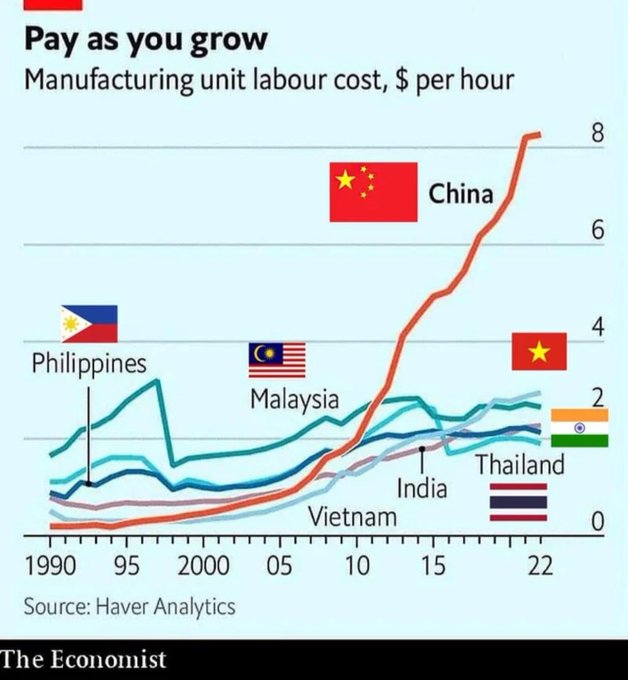
Here's the deal, when they lived there 10-20 years ago things were significantly worse than they are today. The average salary of a worker in main Chinese cities has risen many times over since they were there:
So if they had some nice things to say about China 15 years ago, why don't they do even more of that today, given that the situation in China is significantly better today than when they lived there ??
To me, these guys were in the same part of China for the same amount of time and reached the same conclusions that I did, and believed living in China was an unacceptable threat to the safety of their children, which shapes their viewpoint today.
The truth is, their content is a one-note negative commentary on every aspect of Chinese society. This as you know has been a lucrative position for them, they've hit the jackpot, so I can understand.
They could also make money being pro-China, so I don't think that is a good argument to impugn their motives.
The other things is that these two guys have zero professional qualifications, they were just ESL teachers and vloggers, there is no depth or seriousness about any of their takes.
So now you have to be a credentialist to know China? What kind of degree did Marco Polo have? lol
Okay, so then you accept Dikkotier because he is a Ph. D.? Of course you don't! Serpentza and Laowhy86 have higher credentials in their bachelors degrees than most Chinese academics, whose degrees are either fake or worthless pieces of paper.
You have to spend some time in Chinese universities to even begin to believe how poor they are. One time a professor at the fourth largest uni in Guangzhou, the third largest city in China, wanted to interview me for his Ph D thesis. His English was perfect, but his thesis was written on a used and wrinkled cocktail napkin, including the statistics that were scribbled in English on a simple spreadsheet.
His thesis was an interview to test if foreigners could count how many words were in a short sentence of eight words he would utter and then ask the foreigner to tell him how many words were in the sentence and this is probably just a 6/10 for weirdness from Chinese professors. And for the record, I miscounted just to make him happy because Chinese men love it any time they can "catch" a foreigner not understanding something Chinese related. According to his wrinkled cocktail napkin, he had already interviewed about 15 other round eyes.
The irony as well is that they come from Upstate NY and S. Africa, two places that have significantly deteriorated and are plagued with economic and social decline, yet they are critical of China, which has been objectively improving over the last few decades, talk about glass houses...
Similar to arbitrary credential standards, now you're setting up a barrier to entry for criticizing China if your own home town is not perfect.
You don't even know in which town Laowhy86 lives or what the conditions there are, so are you saying no one from New York can criticize China? Can New Yorkers laud China?
Serpentza has made videos about the problems in South Africa, which is why he left there and moved to China, which he has talked about many times. According to your rationale, he can never qualify to criticize anywhere he's lived because S.A. has problems. You're over-reaching.
Here is a
video that I posted recently about Serpentza's specific claims regarding the lack of trust in Chinese society.
China Is a Zero-Trust Society — and This Explains Everything
16 seconds: a fall down scammer who makes bystanders afraid to get involved, thereby decreasing social trust.
3 min and 30 sec: food adulteration in China: There are endless examples of this.
4 minutes: a woman who tries to help an old man across the street is punched because he assumes that she is a scammer.
4 minutes and 15 seconds: China's trust comes from high tech surveillance, not an honor code. You can't use the Internet in China without your activity being monitored and tied to your digital ID.
5 minutes: He says that if something is stolen from you the police will not use the surveillance footage to help you or to solve the crime. I knew several people who also had this experience.
5 minutes and 20 seconds: Public shaming, humiliation and fear is used for control, not high trust, where students, workers, or people on the street have their names and addresses published by the police.
5 min 45 seconds: The police are not trusted because of corruption and unfair treatment. In my experience and everyone I knew, the Guangzhou police were not trusted at all. If you report a crime to them, they will find a way to make you suffer or punish you by wasting your time or threatening you and will never take action on your behalf if you're not a party member or connected somehow.
6 minutes and 30 seconds: No one trusts doctors. I saw this myself all the years I was there, although it is improving. Chinese doctors and hospitals in general are not trustworthy. For example, like Serpentza, I taught English to doctors at a training hospital. One day my boss's son got sick and even though it was not too serious, just a mild fever, he took him far across town to the only well-known trustworthy hospital.
Chinese people mistrusted their hospitals so much that I found foreigners were the best source of information on where to go because we were willing to try and find good ones, while the locals were too pessimistic and just went to the closest one and hoped not to die.
See this short video from a Brit who came to Guangzhou during the years I lived there. He'd been living in Taiwan, but was on a trip to the mainland. I have heard and read countless stories like his about doctors in China, although, like I've said, medical care in China improved a lot during the years I was there.
8 minutes and 50 seconds: A scammer who pretends to be hit by a car is caught on a dashcam, which you said in a previous post would have eradicated this scam, but the time stamp is 2025.