

You are using an out of date browser. It may not display this or other websites correctly.
You should upgrade or use an alternative browser.
You should upgrade or use an alternative browser.
Iran-Israeli Conflict Thread
- Thread starter LaAguilaNegra
- Start date
Maintaining that NATO is for 'Israeli interests' is testimony that the echochamber is spiraling, buddy can't handle his sponsored worldviews and takes are going head under after some scrutiny, cortisol is spiking and the man just lost the ability to actually make an argument.
Imma bounce that ball back. Explain, in your infinite wisdom, how NATO is a construct that was created for 'Israeli interests'.
Who is talking about NATO? You said that Spain was in opposition to "US interests" by not allowing their airbases to be used to fight Israel's war. Fighting a war on behalf of Israel yet again is not in the interest of the US. That is becoming more and more evident by the hour. You are flailing, dude. This is not going the way you thought it was going to go.

Seriously contemplating making another list of CooperBloopers, this time focusing on bizarro predictions and fraudulent analysis throughout the years.
The one below is a proper appetizer. Two months ago you mistakenly concluded that US bases in Syria were there to blah blah blah
You want to talk about embarrassing predictions, and staying on topic here:
-You just claimed only 2 hours ago that "nobody in Tehran aims at Israel anymore", and funnily enough 2 posts later IIMT shows a random reporter in Tel Aviv walking around getting pounded.
And here is the latest news earlier tonight:
You are the prime poster of zionist propaganda points on this site, goyslop whoppers like:
-Israel doesn't really run US foreign policy, no, seriously!
-85%-90% of Iranian missiles have been intercepted
The real rate is the opposite, 85% to 90% is a good estimate of percentage of missiles that do get through.
I've tried to help you out last week by posting the analysis of Dr Postol, a leading expert in the field from MIT. Here is his latest assessment on Iranian missile capabilities, which in his estimate are far from having been suppressed:
And another new assessment from Italian expert Gus, host of Millennium 7, one of the best channels on military air tech:


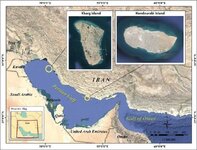
Keith Kellogg on applying maximum pressure on Iran through undercutting the economic lifelines. With Tehran's conventional abilities degraded and its Navy out of the way Kellogg argues that the US should take over Kharg Island, located in the Northern Persian Gulf. Kharg Island is home to Iran's biggest export terminal and apparently 80- 90 percent of Iran's crude oil gets processed through this facility.
Right now the US refrains from attacking Iranian oil infrastructure and for good reason - Asia in its entirety is dependent on a steady flow from the Middle East. The Iranians on the other hand are constantly attacking oil infrastructure and tankers in the Gulf and beyond, attempting to create such economic upheaval that it would alter DC's cost- benefit analysis and result in a change in approach aka step back.
By taking Kharg Island the US would undercut Iran's oil production and simultaneously gain even more leverage. If the Iranians then decide to bomb their own facilities it will be on them.
Right now the US refrains from attacking Iranian oil infrastructure and for good reason - Asia in its entirety is dependent on a steady flow from the Middle East. The Iranians on the other hand are constantly attacking oil infrastructure and tankers in the Gulf and beyond, attempting to create such economic upheaval that it would alter DC's cost- benefit analysis and result in a change in approach aka step back.
By taking Kharg Island the US would undercut Iran's oil production and simultaneously gain even more leverage. If the Iranians then decide to bomb their own facilities it will be on them.

In hindsight, it seems that Trump taking out Maduro in January was planned with the upcoming Iran war directly in mind, in order have a secure alternative source of oil for the USA (and sell any excess to anyone else who would be cut off from the middle east)
USA taking gold from Venezuela too
Clever, if so!
It's a pretty good sign nobody thought so.Just because it wasn't put into a post doesn't mean no one thought so.
Why didn't you post a prediction of a US-Iranian war? My first guess is that you weren't expecting it at all.

They have been using the Yemen and Syria ward as an opportunity to hone their experienceWhat experience does the Saudi military have?
.
Not wit their militaryIsn't this a country who outsources all their difficult jobs to foreigners?
Bet you're wrongThey're not known for martial prowess and recently failed against the Houthis.
I'm sure the USA has been telling them since 1990 and Gulf War 1 that we'll do their fighting for them.
Since I'm a Gulf of Oman geopolitical expert this week, I can confidently say that the chances are zero.
The most obvious comparison is Iran and Ukraine.The longer this war continues, the better the odds of GCC countries jumping in against Iran. While the U.S. and Israel are simply aiming for regime change, Iran views this war as something close to an existential struggle. Their strategy has been to attack the U.S. via its regional proxies, but the more Iran attacks its neighbors (inflicting significant economic harm on them in the process, both to their oil-producing infrastructure and tourism/reputation for safety), the more likely they are to invite retaliation.
The US under Biden flushed around $250 billion through Ukraine. The EU nations flushed several dozen additional billions through Ukraine. Anybody would have to agree that Ukraine wouldn't have done as well over the past four years without this kind of graft.
Nobody is flushing money like this through Iran. Some people say Russia and China will flush money like this through Iran, but this is quite unrealistic.
Without the support levels flushed through Ukraine, Iran will fare poorly against Western attacks. This is indeed an existential struggle for the Islamic regime.
Think back to Gulf War 1 & 2. How much risk did Saudi take with Iraq? They allowed the USA to build a hyuge base to do their fighting for them.
The Saudis are useless, and their fighting capability is a joke. They buy tons and tons of modern weaponry from the US, but they essentially just let it gather dust and rust. Like a spoilt rotten kid with a room full of toys. The purchasing of equipment is basically a deal with the military-industrial complex in exchange for US security guarantees.

Who is talking about NATO? You said that Spain was in opposition to "US interests" by not allowing their airbases to be used to fight Israel's war. Fighting a war on behalf of Israel yet again is not in the interest of the US. That is becoming more and more evident by the hour. You are flailing, dude. This is not going the way you thought it was going to go.
Little dark nights ahead...
@Cooper yeah it's called cluster bombing.
US is going to work with local armed groups, these have been cultivated for years already and they have much wider local support + a staging base in the direct rear (Pakistan, Iraqi Kurdistan) than any outsider will ever have. These local fighters will receive heavy CAS but for that to work you need American specialists embedded on the ground to properly communicate and navigate strikes. Likely highly trained SF teams will be working as well.There is a risk involved to violent engagement and I'm not familiar of examples of Saudi taking such risks in the past 60 years, but it's def. not my area.
While it is normal for vultures to attack a corpse, that is a very low risk engagement.
Think back to Gulf War 1 & 2. How much risk did Saudi take with Iraq? They allowed the USA to build a hyuge base to do their fighting for them.
I'm familiar with them putting down some Bahrainis around 2014 and the recent stuff with the Houthis and they are not impressive.
If they can pay or induce the Americans to do their fighting for them, that's what they're likely to do.
This move is yet premature though, US is still softening the military infrastructure in many regions and wearing down IRGC forces, ammo depots, command and control structures, etc. through relentless bombing campaigns. The problem: if these local groups, which are poorly trained and relatively small in number, fail to establish a foothold then the appetite for little nudge by US forces might increase and that's a slippery slope to actual boots on the ground, should not happen.
As for the Saudis, like all other high income and (relatively) cultured societies, they are casualty averse. This is somewhat of a problem, because the Saud Monarchs are ambitious in a number of fields, Empire building being one of them. In the first year in Yemen the 1000+ bodybags boundary was topped already, and constant Houthis incursions into Saudi territory became a national disgrace, aka advancing in reverse. Solving the problem of saving face and not losing their own people at this rate anymore was done the traditional Saudi way: by throwing money at it.
In this case that meant fat contracts for Western PMCs, and relatively decent contracts for the thirdworld rank and file. In the 2016-2020 timeframe the Saudis relied mostly on Sudanese, Colombians, Filipinos, Ugandans, Syrians and Pakistani, their cumulative numbers above 150k. Later, and other Gulf States did the same, the switch was made to Muslim Subcontinentals. Late last year the Sauds officialized this setup by signing a Defence Pact with Pakistan, this in reality means that Pakistan will fight for Saudi Arabia's interest and the Saudis will pay them big money to do so.
It's the same in other Gulf States. The Emirati forces are even worse, 80 percent foreigners whereas with the Saudis its mostly irregulars/ auxiliaries. In the Emirati forces foreigners mostly have the same national backgrounds as with the Saudis. In some recruiting countries signing military contracts with Gulf States as a soldier of fortune is now considered a top tier career move, it's a paycheck everybody desires. The Emiratis even copied the French Foreign Legion and started their own Emirati Foreign Legion
Check the community notes. This isn't anything to do with Iran/Israel.
There's so much bickering in this thread. I'm trying to get some updates from you guys who usually have your ears to the ground but you're all fighting with each other over nonsense.

Russia and China keep their actions secret, unlike the West, which cannot resist announcing everything to the world.Nobody is flushing money like this through Iran. Some people say Russia and China will flush money like this through Iran, but this is quite unrealistic.
Without the support levels flushed through Ukraine, Iran will fare poorly against Western attacks. This is indeed an existential struggle for the Islamic regime.
Check the community notes. This isn't anything to do with Iran/Israel.
There's so much bickering in this thread. I'm trying to get some updates from you guys who usually have your ears to the ground but you're all fighting with each other over nonsense.
Nice to hear from you Bibi, took you long enough.
The Houthis are waiting to see if the Gulf States declare war on Iran. If they do, the Houthis have announced they will side with Iran, which means the possibility of major shipping problems through the Red Sea. Previously, the US Navy showed itself to be completely ineffective at stopping this.The Red Sea theater is quiet. Houthis made some threats, but haven't taken any actions, not even against Israel, so far.
Actually, escorting ships through the Red Sea and the Strait of Hormuz is logistically impossible for the US Navy as they do not have enough destroyers. This has been pointed out by Sal at 'What's Going on With Shipping'. It would also make the US Navy easier targets, being right next to Iran and Yemen.
Another thing to consider is that if the Houthis start attacking shipping right now, the US may decide, together with the Saudi Military, to invade Yemen and destroy them. This as some sort of face-saving exercise / consolation prize. Once the Gulf States have committed to war with Iran, it becomes much less likely.
Last edited:
The incident on the downing of 3 F15s by a Kuwaiti F18 is still under investigation, and there's been some rumors on malign intention already but this video is definitely giving that thesis more backbone. The Kuwaiti pilot either did on purpose or was terribly inexperienced and lacking standards.

Really? After last years war it was pretty obvious. Imagine it or not but this forum despite my sympathy towards it is a pretty insignificant part of my life. I don't come on here like a child to a sand box and share my every single thought because I'm not an ego maniac. If I were I'd be posting 10x as much. This is why the assumption that everything important has to exist on the forum or it doesn't exist at all makes me chuckle. It reminds me of an old George's sketch:Why didn't you post a prediction of a US-Iranian war? My first guess is that you weren't expecting it at all.
Last edited:

Fontana and radisson blue hotel in Bahrain attacked. Rumored US ambassador and soldiers were there. No info on casualties.
Edit: Qatar condemned today an attack by Iran against various buildings in Bahrain, where Qatari Navy personnel were present. According to the statement, they were part of a joint naval command of the armies of the Gulf Cooperation Council (GCC) states.
Bahrain reports damage two hotels and residential building in Iranian attack
Manama, March 6 (SANA) Bahrain’s Interior Ministry reported on Friday that two hotels and a residential building in the capital, Manama, were hit by an
sana.sy
Edit: Qatar condemned today an attack by Iran against various buildings in Bahrain, where Qatari Navy personnel were present. According to the statement, they were part of a joint naval command of the armies of the Gulf Cooperation Council (GCC) states.
Last edited:
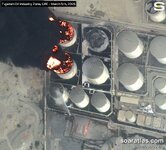
According the WSJ UAE is mulling freezing Iranian assets as a means of reprisal against repeated Iranian attacks. The financial and reputational toll of this war on the Emiratis is gigantic, just yesterday the Al Fujairah oil facility came under attack, fires are still burning.
No country has received more incoming projectiles than the UAE.
No country has received more incoming projectiles than the UAE.