The China Thread

More Chinese IP theft by immigrants allowed access to American technology. And yet we're supposed to believe that China, who has stolen much of the technology that it has implemented with slave labor in order to compete on a global market that catered to them somehow has a moral superiority or immunity from the failures of the West.

How Do You Steal an Airplane? One Piece at a Time​

Looking to reduce China’s reliance on Western aviation technologies, Beijing had spies spend years accumulating knowledge about the industry’s secrets.

1771094905588.png

By Jordan Robertson, Victor Yvellez, and Drake Bennett
February 13, 2026 at 5:01 AM UTC

China is rapidly closing the gap with the US as the world’s biggest passenger aviation market, but it remains almost entirely dependent on the US and Europe for advanced airplane technologies. China has worked for nearly two decades to change this through homegrown innovation and, according to US authorities, rampant intellectual property theft.

That secret-stealing mission has fallen to China’s Ministry of State Security, which is believed to be one of the world’s largest intelligence agencies. Some estimates put the size of the MSS at hundreds of thousands of employees—more than the FBI and the CIA combined.

The targets of the MSS’s industrial espionage, according to US authorities, span the supply chain for modern jetliners. They include tiny, specialized components like spark plugs that play a critical safety role and also some of the most complicated and technologically advanced machines on Earth: the jet engines themselves. China’s Ministry of Foreign Affairs said in a statement that “the accusations by the US are completely fabricated.”

Bloomberg’s reporting has focused on a sprawling FBI investigation into a specific unit within the MSS, the Sixth Bureau. The bureau has been tasked with stealing these secrets that China needs to build its own commercial planes—one piece at a time.

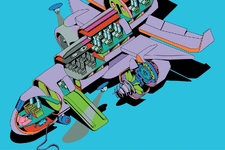
1771095040912.png

Auxiliary power units​

These small engines sit in an aircraft’s tail cone, providing electrical power when it’s on the ground. Evidence the FBI gathered found an Arizona-based engineer at Honeywell International Inc., a leading maker of APUs, flew to China repeatedly over 20 years, providing confidential information, including engineering designs, to the government.

Aircraft body​

The Commercial Aircraft Corp. of China, whose C919 planes began domestic flights in 2023, has been seeking certification to fly into Europe, attempting to cut into the duopoly of Boeing Co. and Airbus SE. Bloomberg reporting has identified spies and Chinese intelligence officers who are central to the country’s efforts to leapfrog Western incumbents.

High-lift systems (flap controllers)​

Embedded in the wings, these technologies control the flaps that regulate the degree of elevation when the plane takes off. FBI evidence shows that a UK engineer specializing in these systems was working with Chinese spies who were trying to get him to provide information about them.

Detonators and spark plugs​

Aviation safety systems rely on these devices to trigger fire extinguishers, inflate escape slides and test jet engines in emergency scenarios. According to the FBI, targets of a hacking campaign linked to Chinese spies included Pacific Scientific Energetic Materials Co., a leading maker of the devices.

Temperature, pressure and fluid sensors​

Placed throughout the plane, these sensors monitor systems for potentially dangerous readings. The FBI’s files and information from private-sector security researchers show that another victim of Chinese hacking was Pennsylvania-based Ametek Inc., whose products include these sensors for aircraft engines.

Navigation and altitude systems​

These systems are used to determine a plane’s coordinates, speed, altitude and other critical flight and safety details. One of China’s targets was a senior Boeing engineer who specialized in this technology, according to the FBI data.

Engines​

Among the highest-value espionage targets are jet engines, a field the US and Europe dominate. The FBI uncovered evidence revealing how spies targeted General Electric Co., France’s Safran SA and others to help Chinese engineers design and build competing engines.


 
China had 50-200% tariffs on foreign cars when I lived there (early 2000's through mid 2010's) and reduced it during the late 2010's, which would obviously incentivize a preference for domestic, although I'm not saying this was the only reason. Obviously domestic Chinese cars did raise their luxury features to match imports as they continued to steal IP in order to improve their production.

110K engineers in R & D sounds as implausible as 300 million people visiting Xinjiang in one year. I gotta ask your source on this R & D thing.

EDIT: Asking Grok, this is what I found.

BYD total employees 950K, R&D 120K = 12.5%

Tesla total 135K, R&D 15K = 9%

I stand corrected. These figures surprise me because I did not think they would scale in a linear manner. I would have thought that 10x increase in workers would be 2x - 3x increase in R&D.

Seems very inefficient to me, but that's how it is. The disparity between Tesla and BYD in workers and R&D compared to market cap also implies significant inefficiency at BYD, but that obviously requires a complex analysis.

I think part of it is that BYD is more heavily invested into battery tech. Also BYD's plants use more robots than Tesla's, and they produce about 3 times as many cars as Tesla, 4.7M vs 1.6M.
 
Let me explain my position: Its a 20 sec clip.

BULLSHIT.

chinese cars cannot be used in Europe without a lot of safety changes made to them. They are basically shit.

German cars are the still the best. In a 10 year ownership a Mercedes is cheaper than a lexus to own. Even with more repaird. Lexus is petrol not diesel. At least in Europe. Mercedes steel.

When I was in China AUDI were the most wanted by the elite.

I dont hate chinese. What I dislike is the fake image you and others want to make of chinese or china. I make deals with them and understand they are different. They are inferior. And ive never been scammed by them.

Have you been inside or driven any recent model Chinese cars? When was the last time you were in China?
 
More Chinese IP theft by immigrants allowed access to American technology. And yet we're supposed to believe that China, who has stolen much of the technology that it has implemented with slave labor in order to compete on a global market that catered to them somehow has a moral superiority or immunity from the failures of the West.

How Do You Steal an Airplane? One Piece at a Time​

Looking to reduce China’s reliance on Western aviation technologies, Beijing had spies spend years accumulating knowledge about the industry’s secrets.

View attachment 27483

By Jordan Robertson, Victor Yvellez, and Drake Bennett
February 13, 2026 at 5:01 AM UTC

China is rapidly closing the gap with the US as the world’s biggest passenger aviation market, but it remains almost entirely dependent on the US and Europe for advanced airplane technologies. China has worked for nearly two decades to change this through homegrown innovation and, according to US authorities, rampant intellectual property theft.

That secret-stealing mission has fallen to China’s Ministry of State Security, which is believed to be one of the world’s largest intelligence agencies. Some estimates put the size of the MSS at hundreds of thousands of employees—more than the FBI and the CIA combined.

The targets of the MSS’s industrial espionage, according to US authorities, span the supply chain for modern jetliners. They include tiny, specialized components like spark plugs that play a critical safety role and also some of the most complicated and technologically advanced machines on Earth: the jet engines themselves. China’s Ministry of Foreign Affairs said in a statement that “the accusations by the US are completely fabricated.”

Bloomberg’s reporting has focused on a sprawling FBI investigation into a specific unit within the MSS, the Sixth Bureau. The bureau has been tasked with stealing these secrets that China needs to build its own commercial planes—one piece at a time.

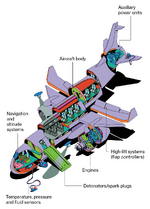
View attachment 27484

Auxiliary power units​

These small engines sit in an aircraft’s tail cone, providing electrical power when it’s on the ground. Evidence the FBI gathered found an Arizona-based engineer at Honeywell International Inc., a leading maker of APUs, flew to China repeatedly over 20 years, providing confidential information, including engineering designs, to the government.

Aircraft body​

The Commercial Aircraft Corp. of China, whose C919 planes began domestic flights in 2023, has been seeking certification to fly into Europe, attempting to cut into the duopoly of Boeing Co. and Airbus SE. Bloomberg reporting has identified spies and Chinese intelligence officers who are central to the country’s efforts to leapfrog Western incumbents.

High-lift systems (flap controllers)​

Embedded in the wings, these technologies control the flaps that regulate the degree of elevation when the plane takes off. FBI evidence shows that a UK engineer specializing in these systems was working with Chinese spies who were trying to get him to provide information about them.

Detonators and spark plugs​

Aviation safety systems rely on these devices to trigger fire extinguishers, inflate escape slides and test jet engines in emergency scenarios. According to the FBI, targets of a hacking campaign linked to Chinese spies included Pacific Scientific Energetic Materials Co., a leading maker of the devices.

Temperature, pressure and fluid sensors​

Placed throughout the plane, these sensors monitor systems for potentially dangerous readings. The FBI’s files and information from private-sector security researchers show that another victim of Chinese hacking was Pennsylvania-based Ametek Inc., whose products include these sensors for aircraft engines.

Navigation and altitude systems​

These systems are used to determine a plane’s coordinates, speed, altitude and other critical flight and safety details. One of China’s targets was a senior Boeing engineer who specialized in this technology, according to the FBI data.

Engines​

Among the highest-value espionage targets are jet engines, a field the US and Europe dominate. The FBI uncovered evidence revealing how spies targeted General Electric Co., France’s Safran SA and others to help Chinese engineers design and build competing engines.


This is the Chinese J-11, which has a body that is the exact replica of the Russian Flanker (Su27/30/35), though the avionics and structural elements are domestic, said to be superior to the Sukhoi's:

J-11-Fighter.jpg


China copied the Flanker back in the 90s when Russia was weak and broke and the two countries were not close allies.

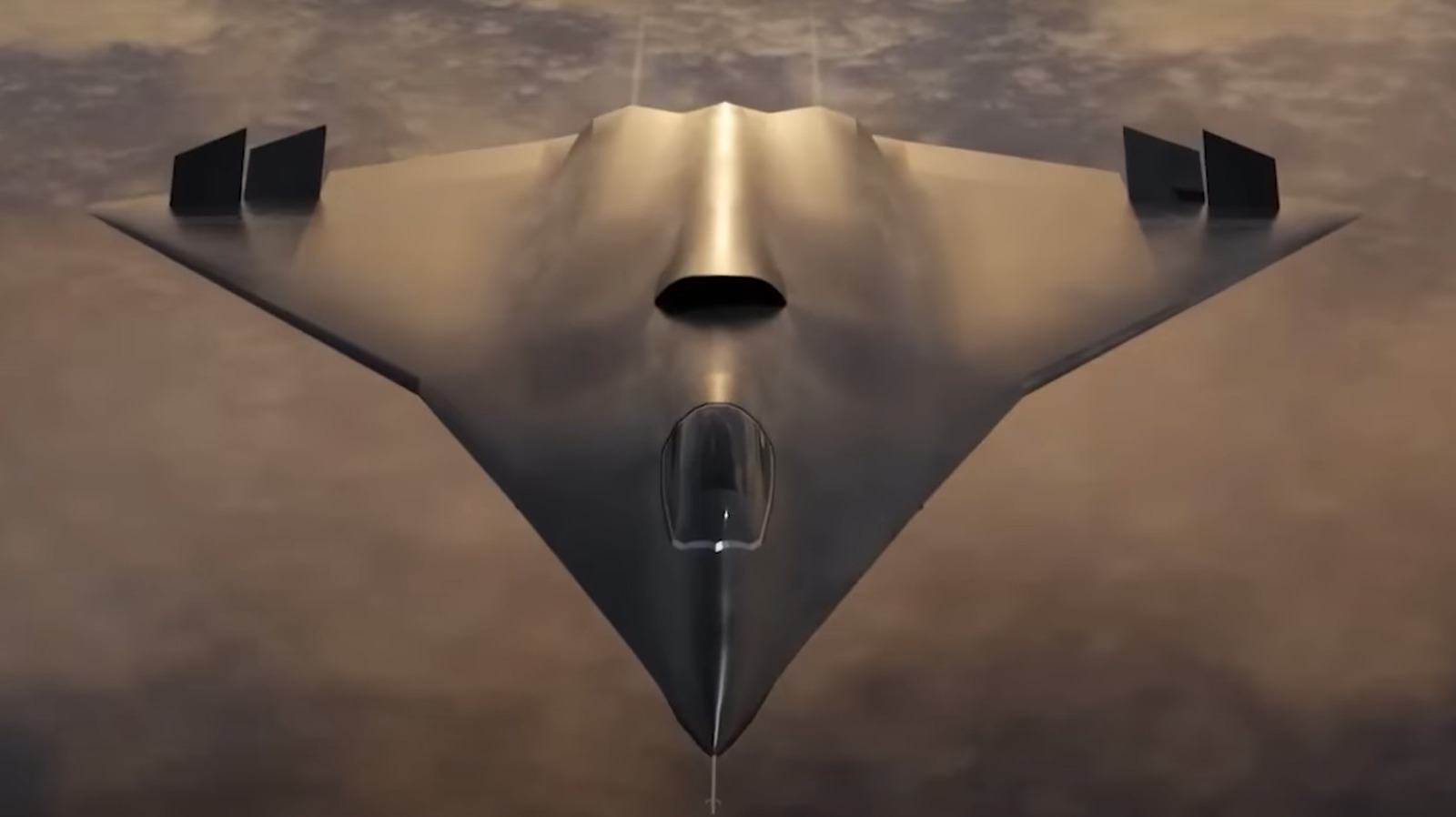
20 years later, China is producing 3 different 6th generation jet fighter designs in addition to 2 stealth fighters (j-20 and J-35), including what is arguably the most original design ever seen on a new fighter project, the triple-engined J-36 :

chengdu-j-36-venom.jpg


l-intro-1746535673.jpg


Of these new designs, one would qualify as heavily inspired from a western design, the J-35, which is a sleeker, dual engined jet that looks a bit like the F-35. The Chinese are well ahead of the US though in radar and BVR missiles.
 
Back
Top