Iran-Israeli Conflict Thread

From the WSJ:


Iran’s Underground ‘Missile Cities’ Have Become One of Its Biggest Vulnerabilities

U.S. and Israeli aircraft are circling over the subterranean bases, destroying missile launchers as they emerge to fire


Iran spent decades constructing underground bunkers to shield its vast missile arsenal from destruction. Less than a week into the war with its two most powerful adversaries, the strategy is beginning to look like a blunder.

U.S. and Israeli war planes and armed drones are circling over the dozens of cavernous bases, striking missile-carrying launchers when they emerge to fire. Meanwhile, waves of heavy bombers have dropped munitions on the sites, apparently entombing the Iranian weapons below ground in some locations.

Satellite imagery taken in recent days shows the smoldering remains of several Iranian missiles and launchers destroyed in U.S. and Israeli airstrikes near entrances to the “missile cities,” as Iranian officials call the subterranean sites.

Tehran managed to shoot more than 500 missiles at Israel, at U.S. bases and at other targets in the Persian Gulf region since the conflict began this past Saturday, although many have been intercepted, according to governments in the region. There have been fewer large salvos since the first days of the conflict, a sign that the U.S.-Israeli attacks are degrading Tehran’s ability to strike back.

“We’re hunting Iran’s last remaining ballistic missile launchers to eliminate what I would characterize as their lingering ballistic missile capability,” Adm. Brad Cooper, the top U.S. commander in the Middle East, said in a video briefing Tuesday. “We’re seeing Iran’s ability to hit us and our partners is declining.”

Tehran appears to have moved some of its missiles and truck launchers out of the bunkers before the war began, hoping to protect them from attack by dispersing them. Cooper said the U.S. and Israel have destroyed hundreds of missiles, launchers and drones.

U.S. Central Command, which is conducting the air campaign, said Wednesday that Iran’s missile launches have dropped 86% in four days.
Analysts said it is likely that much of Tehran’s remaining stockpile of thousands of medium- and short-range missiles remains in underground bases whose locations are mostly known to the U.S. and Israeli militaries.

That underscores a fundamental flaw in the missile-city concept: “What was once mobile and difficult to find is no longer mobile, and easier to hit,” said Sam Lair, a research associate at the James Martin Center for Nonproliferation Studies, a research organization in Monterey, Calif.
With Iranian air-defense batteries largely neutralized, the U.S. and Israel are keeping slow-moving surveillance aircraft flying over known missile bases in some locations—and only attacking, using manned jet fighters or with armed drones, when they see signs of activity, analysts said.

A cluster of bases near the southern city of Shiraz appears to have been struck several times, according to analysts. Commercial-satellite photos released by the Martin Center show mobile missile launchers that had apparently exited one of the underground sites into a nearby canyon were destroyed before firing their missiles.

A March 2 satellite image of Shiraz, three days into the war, showed a reddish plume near one of the demolished launchers, indicating that nitric acid fuel was leaking from a missile. Several other launchers were destroyed, igniting a fire that appeared to have spread through the canyon, according to Lair.

At a base near Isfahan, a satellite on March 1 captured a photo of an undamaged missile launcher, apparently moving down the road near the facility. A crater in the road nearby suggested a U.S. or Israeli warplane tried to strike the vehicle but missed, said Lair.
A photo of the same site the following day revealed evidence of later heavy bombing of several entrances to the underground facility. Debris “from bunker buster munitions can be seen around both sets of tunnel entrances,” Lair said in a social-media post. “Whether the entrances collapsed is unclear.”

The entrance and nearby roads to an Iranian base near Kermanshah appeared to have been struck by heavy U.S. bombs, according to Lair, citing a March 3 photo by Planet, a commercial satellite imagery company.

Iran is continuing to attack using armed drones and sporadic missile launches. It might be holding back some of its most powerful and longest-range missiles for use as a last resort if the regime appears in imminent danger of falling.

“No one can count their arsenal, which means there’s a lot of uncertainty about how long they can last, which helps them,” said Decker Eveleth, a research analyst with CNA Corp., a Washington, D.C.-area think tank.

Tehran decentralized authority for firing missiles to prevent U.S. and Israeli strikes on its military and political leadership from crippling its ability to respond. Iranian commanders have said they can quickly replace destroyed missiles by building more, though adding additional launchers is more difficult.

Almost all of the dozens of missile bases are underground but have aboveground buildings, roads and entrances that make it possible to identify them from satellite photos, áccording to analysts. The Pentagon and Israel’s military have spent years locating the facilities.

U.S. air attacks appear to be focusing on bases in southern Iran, while Israeli warplanes are mostly striking facilities in the north, analysts said.
The tunnel entrance to an underground missile base north of the Iranian city of Tabriz, which was visible in satellite photos taken last month, appeared to be collapsed in a March 1 photo, a sign that the facility had been targeted in airstrikes. Tunnel entrances at another site near Tabriz were damaged, a Planet image released by the Martin Center showed.

Three other missile bases in southern Iran, near the towns of Khorgo, Haji Abad and Jam, have also been hit, according to analysts.
The decision to attack surface targets reflects both the large numbers of Iranian sites as well as the limited availability of bunker-busting bombs in the U.S. arsenal that could penetrate beneath the surface and destroy the underground facilities, analysts said.

It also highlights the urgency for the Pentagon to knock out Tehran’s missiles early in the conflict, or at least cripple its ability to fire them, before the supply of air-defense interceptors for knocking down incoming Iranian missiles is exhausted.

“These attacks are being carried out in waves, where they destroy two or three targets at a time,” said Colin David, a former U.S. Army missile specialist and a researcher with Alma. “After multiple waves, the bases lose their effectiveness due to the loss of surface structures and launchers.”

Separating fact from fiction about the missile cities has always been difficult. Iran released video footage in March 2025 of what it claimed was its latest large underground facility, showing senior commanders touring long, windowless corridors filled with missile-carrying trucks. The video didn’t name the location.

At some bases, Tehran has built crude underground silos for firing missiles without having to bring them into the open. A base in southern Iran near the town of Khormuj is believed to have nine underground silos for firing missiles without bringing them to the surface, according to David. Primitive by U.S. standards, the silos are little more than deep holes dug into the side of a mountain that point toward the nearby Persian Gulf, flanking a paved entrance to the underground facility.


It is believed that Khormuj has a mechanical loader for moving missiles into the silos on train tracks, instead of on mobile launchers. Tehran released a video in 2022 showing a facility that resembled Khormuj without identifying the location, David said. It showed a half-dozen upright missiles moving along the tracked carousel in a cavernous tunnel.

But Iran has largely abandoned the idea of firing missiles from underground launch locations, according to Eveleth, owing to the technical difficulties of reusing silos.
 

With out getting into too much here... We already know what weapon to target match is required here.

There's a reason B52s are out. You better believe they are weapons free with all the deep penetration bombs they need to decimate these facilities.

LIke it or not ... Our military capabilities in action are so far and away beyond what anyone else can do it's like watching kindergarteners fighting Andre the Giant
 
With out getting into too much here... We already know what weapon to target match is required here.

There's a reason B52s are out. You better believe they are weapons free with all the deep penetration bombs they need to decimate these facilities.

LIke it or not ... Our military capabilities in action are so far and away beyond what anyone else can do it's like watching kindergarteners fighting Andre the Giant
I think we all like it.

It's a testament to America that even so parasitized by Israel, you are still far and away the mightiest Christian Nation on Earth in history.

That said, the big guns and giant explosions aren't really the problem here.

It's more the fact they aren't being aimed at the Cannibal Paedophile Vampires that ate children and raped them.

Though I will admit, the way China and Russia have reacted to this is actually kinda reassuring.

It would be unnerving if they were happy about this, or eager to see Americans die. The fact that they are intimidated and off balance makes things feel a little less like a puppet show created to fool us all.
 

With its supreme leader killed and its war machine under relentless U.S. pressure, Iran now stands largely alone - its longtime partners Russia and China offering nothing more than diplomatic condemnations and expressions of concern

Russia and China’s restraint reflects a cold calculation, analysts say: intervening as Iran faces Israel and the United States would bring high costs, limited gains and unpredictable risks - burdens neither power appears willing to shoulder.

Weren't people here talking a some sort of Russia/China/Iran alliance fighting the good fight?
 
It would be unnerving if they were happy about this, or eager to see Americans die. The fact that they are intimidated and off balance makes things feel a little less like a puppet show created to fool us all.

Or, another interpretation is that the hand that has always been there is being revealed a little more.

We are presented with various puppet shows at our level, it's difficult to know exactly who's jostling who at the higher levels (I don't believe Trump, Putin, or Xi represent the actual highest levels of influence. The highest levels are obscured from view but I think jostling is still occurring there ).
 
Countries like Saudi Arabia and UAE import 80%-90% of their food through the straight that Iran has just closed, Saudi Arabia has one of the strongest military in the world somewhere in the top 5, they are enemies of Iran and allies with USA, what are the chances of these neighboring countries teaming up with USA to fight Iran since Iran is now interfering with their countries supply of food and resources?
 
Countries like Saudi Arabia and UAE import 80%-90% of their food through the straight that Iran has just closed, Saudi Arabia has one of the strongest military in the world somewhere in the top 5, they are enemies of Iran and allies with USA, what are the chances of these neighboring countries teaming up with USA to fight Iran since Iran is now interfering with their countries supply of food and resources?
What experience does the Saudi military have?

Isn't this a country who outsources all their difficult jobs to foreigners?

They're not known for martial prowess and recently failed against the Houthis.

I'm sure the USA has been telling them since 1990 and Gulf War 1 that we'll do their fighting for them.

Since I'm a Gulf of Oman geopolitical expert this week, I can confidently say that the chances are zero.
 
Saudi Arabia has one of the strongest military in the world somewhere in the top 5, they are enemies of Iran and allies with USA, what are the chances of these neighboring countries teaming up with USA to fight Iran since Iran is now interfering with their countries supply of food and resources?
The longer this war continues, the better the odds of GCC countries jumping in against Iran. While the U.S. and Israel are simply aiming for regime change, Iran views this war as something close to an existential struggle. Their strategy has been to attack the U.S. via its regional proxies, but the more Iran attacks its neighbors (inflicting significant economic harm on them in the process, both to their oil-producing infrastructure and tourism/reputation for safety), the more likely they are to invite retaliation. Further, the weaker Iran becomes (and they certainly will not grow any stronger in absolute terms as the war drags on, although its possible they can grow in relative strength if they handle attrition warfare better than the U.S.), the more attractive a target they become for their neighbors. Like a wounded animal, the vultures will begin circling if they sense an opportunity for an easy meal. And this goes double if Uncle Sam (and Uncle Shlomo?) can provide both military support and economic incentives to any potential allies willing to put boots on the ground in Iran. Greed, ambition, and the settling of scores dating back centuries may ultimately provide enough of a carrot to draw more combatants into this fight.
 
🔻 OBAMA JUST LAWYERED UP. AND NOW WE KNOW WHY.

March 2, 2026. 7:00 AM.

Barack Hussein Obama has retained a team of 9 criminal defense attorneys. Not civil. Not advisory. Criminal.

The same man who told you “Hope and Change” is now preparing for a federal grand jury subpoena expected by March 7.

⚡️ THE $150 BILLION LIE

In 2016, Obama sent Iran $150 billion and $1.7 billion in physical cash — pallets of money loaded onto unmarked cargo planes in the middle of the night.

He told you it was a nuclear deal.

It wasn’t.

The DOJ files released yesterday show that $2.3 billion of Epstein’s network ran through Iranian banks. Deutsche Bank. JPMorgan. And Bank Melli Iran — a state-owned bank under Obama’s “nuclear deal” exemptions.

Obama didn’t pay Iran to stop enriching uranium. He paid Iran to store the evidence.

The server farm. The blackmail tapes. The financial records. All moved to Tehran between 2016 and 2019 — on Obama’s watch, through Obama’s channels, with Obama’s money.

Trump just sent the military to recover it. Now Obama needs 9 lawyers.

🔻 THE HARVARD CONNECTION

Two days ago, Lawrence Summers — Obama’s top economic advisor and former Harvard president — resigned from Harvard without explanation.

His name appears on the Butterfly Foundation recipient list. The $340 million Epstein trust.

Summers met with Epstein at least 14 times after his 2008 conviction. At Harvard. At the mansion. At the island.

Obama appointed him as Director of the National Economic Council in 2009 — one year after Epstein’s conviction. Not despite the connection. Because of it.

⚡️ THE CLINTON TESTIMONY

Bill Clinton testified under subpoena before the House Oversight Committee this week. First time in history a former president was deposed in a criminal investigation by Congress.

Hillary testified separately. Behind closed doors.

But here’s what matters: Clinton was asked about Obama. Specifically about a 2015 meeting at the Clinton Foundation where Obama, Clinton, Summers, and Epstein’s lawyer were all present.

The subject of that meeting? “Asset relocation.”

Assets. Not money. Not investments. Evidence.

🔻 THE TIMELINE

2015 — Meeting at Clinton Foundation. “Asset relocation” discussed.
2016 — Obama sends $150 billion to Iran. Pallets of cash.
2017 — NSA intercepts CIA black site communications inside Iran.
2019 — Epstein arrested. Then murdered. Tapes “disappear.”
2025 — Trump returns. Bondi appointed. Investigation reopens.
2026 — US military recovers tapes from Tehran. Obama lawyers up.

Every dot connects. Every dollar traces back. Every lie has an expiration date.

And Obama’s just expired.

⟁ The grand jury meets March 7. Share this. The world needs to see the full picture.


Countries like Saudi Arabia and UAE import 80%-90% of their food through the straight that Iran has just closed, Saudi Arabia has one of the strongest military in the world somewhere in the top 5, they are enemies of Iran and allies with USA, what are the chances of these neighboring countries teaming up with USA to fight Iran since Iran is now interfering with their countries supply of food and resources?

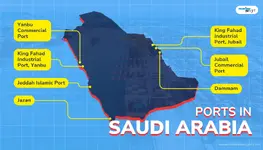
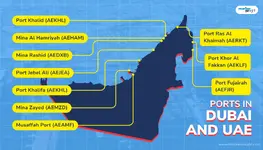
Both countries have ports outside the Strait of Hormuz.
Saudi Arabia on the Red Sea coast, and the UAE on the Gulf of Oman (click to enlarge).
Ports-in-Saudi-Arabia.png.webpPorts-in-Dubai-and-UAE.png.webp
The Saudi port of Yanbu and the Emirati port of Fujairah, both have large, modern grain terminals (as well as other vital infrastructure) purpose-built for this exact scenario.
 
Ice Age Farmer:

Everyone's focused on oil — but it's not just oil:- The United Arab Emirates (UAE) imports 80-90% of its food- Saudi Arabia, 80%- Kuwait, 95%With the Strait closed (or even "open" but with rates exploding 650%), the literal lifeline of these nations is cut off. And yes, with UAE/Saudi Arabia/Qatar stopping oil production, we are quickly entering an energy crisis that will have DRASTIC effects on food availability and pricing.Be prepared...

Those countries have zero military. They are useless. What they have is money due to Gas and Oil. And they will put pressure on Trump if things escalate.

Qatar I think had something similar not long ago. There was a blockade made by Trump to shake them for cash. And Saudi Arabia closed the border with Qatar.
What they say arabs from that region can´t accept is a shortage of milk. From all the food missing which could cause a riot. Milk is the one which always needs to be available in supermarket shelves. During that blockade Qataris wanted to buy cows. And take them to Qatar on airplanes. There supposedly they had to put the cows in warehouses with air conditionings for the cows to survive the heat. Might sound unbelievable but it´s true. I actually checked some cows to send there. And learned some things about cows. Anyway they managed to survive the blockade. Qatar has a really nice area called The Pearl. And a shopping mall made out of the finest materials available. A level of luxury not seen in many places.


The heat in GCC is unbearable in the summer. Dubai has the biggest shopping mall cause during summer you cant walk on the streets.

The logic behind who wins this war is flawed. One american life is worth 100 iranians. That´s the real question here. How many casualties can america sustain without caving to the public opinion pressure? When the videos of boxes with flags on top of it start leaking the perspective will change drastically. 1 american death would be too many. BTW 6 US soldiers dead is utter bullshit. CORONA ORANGE CRAP STYLE. Theres much more casualties. How long can the US army sustain casualties for Israel before some revolt start happening within ranks?

Mussolini was dragged in the streets of Rome. Cause he didnt realize Italy was losing WWII and he needed to cut a deal with Allies. Rome started to get bombed. Game over for Benito. It´s inside US that the tension will happen. Both Hegseth and Rubio seem completely dumbfounded on why this war is being fought over. Hegseth seemed to have gained some balance. But they know in their core this is all orange mongo shit. And Rubio/Vance can kiss the presidency ticket goodbye. Cause a mixed bathroom Obama 2.0 will follow Trump presidency. People are tired of wars. And crazy shit.

The other problem is if this escalates to some kind of intervention from Russia or China. China would send NK first. If any of those two get involved. Allies might win. But at what cost?

Anyway a lot of moving pieces. Israel should have fought this war alone. That´s their shit. Not US or EU business. But jews. Helas. Napoleon has good quotes on them.
 
Last edited:

WSJ ran a story the other day on the ballistic missile 'cities' dug into the mountains, they are static targets which are and have been known to Israeli and American intelligence for a long time and are easy to hit with the heavy long range strategic bombers. Damage assessment is difficult but judging by the sharp decrease in launches it is at least hindering the missile bunkers and possibly destroying them, it's also hard to move the missiles out

The US is using thermal imaging and signature pattern tracking to detect any launch whenever a ballistic missile gets fired it gets picked up immediately and fed into livetime AI driven data assessment capabilities, B52s and B2s later bomb the missile bunker in the following hours/ days and Iran isn't able to contest anything due to the US' total air domination. DC is systematically dismantling Tehran's ballistic deterrent.
 
Both countries have ports outside the Strait of Hormuz.
Saudi Arabia on the Red Sea coast, and the UAE on the Gulf of Oman (click to enlarge).
View attachment 27832View attachment 27833
The Saudi port of Yanbu and the Emirati port of Fujairah, both have large, modern grain terminals (as well as other vital infrastructure) purpose-built for this exact scenario.

They're not going to run out of food, they can get it through Oman in the south and Turkey/Syria/Iraq from the north. Not a crisis. They will just have to pay more in transport and logistics costs.


The longer this war continues, the better the odds of GCC countries jumping in against Iran. While the U.S. and Israel are simply aiming for regime change, Iran views this war as something close to an existential struggle. Their strategy has been to attack the U.S. via its regional proxies, but the more Iran attacks its neighbors (inflicting significant economic harm on them in the process, both to their oil-producing infrastructure and tourism/reputation for safety), the more likely they are to invite retaliation. Further, the weaker Iran becomes (and they certainly will not grow any stronger in absolute terms as the war drags on, although its possible they can grow in relative strength if they handle attrition warfare better than the U.S.), the more attractive a target they become for their neighbors. Like a wounded animal, the vultures will begin circling if they sense an opportunity for an easy meal. And this goes double if Uncle Sam (and Uncle Shlomo?) can provide both military support and economic incentives to any potential allies willing to put boots on the ground in Iran. Greed, ambition, and the settling of scores dating back centuries may ultimately provide enough of a carrot to draw more combatants into this fight.

The Saudi, UAE, don't have a real army, it's a boutique outfit with fancy high-end jets and hardware that is more for show than anything else, other than decent air forces. Their military budgets are a form of protection money for their main sponsors (US for KSA, and US + UK and France for UAE). Their soldiers are mostly mercenaries, their role is to put down any domestic insurrections, not fight real wars. The reason for this is that the ruling monarchs would get overthrown by warlord generals, this has been the model across the Arab world, also the old school model in Latin America.

Despite their massive military budgets, the Saudis keep losing to the Yemenis, who are a hardened people, a bit like the Afghans.

Iran is basically attacking the GCC for 3 reasons: to neutralize US bases and staging grounds (esp. radars), to put pressure on the GCC to make the war stop by threatening their livelihood (oil and gas, tourism/logistics/finance hubs), and to control traffic through Hormuz in order to restrict oil flow and spike oil price. Trump was not in a great position domestically before the war started and if oil prices spike, inflation will get a lot worse, that's what Iran is going to try to do.
 
Back
Top