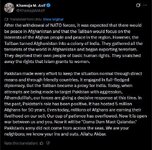
The Indo-Pacific Geopolitics Thread

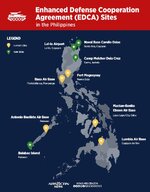
The USA has over 100,000 troops stationed permanently in more than 100 military bases across South Korea, Japan, Philippines, Australia and elsewhere in south east asia and the the pacific. This is why Taiwan has not been invaded by mainland China for over 70 years.
Not enough. China has over two million active troops, 370 naval vessels, including aircraft carriers and submarines, and have been training to take Taiwan for a long time. The reason they have not, so far, is that they would prefer a peaceful resolution, and do not like the optics of an invasion. But with international law now consigned to history, they will care a lot less for these things.

As of early 2026, China's navy, the People's Liberation Army Navy (PLAN), operates more than 370 ships and submarines, making it the largest naval fleet in the world by hull count. This figure includes a growing inventory of major combatants, aircraft carriers, submarines, and amphibious vessels, with projections indicating the fleet could reach 425 ships by 2030. The U.S. Department of Defense’s 2024 report confirmed that China’s naval fleet exceeds 370 vessels, marking a significant numerical advantage over the U.S. Navy.

  • China’s fleet includes three operational aircraft carriers—Liaoning, Shandong, and the advanced Type 003 Fujian, which entered service in 2025 and features electromagnetic catapults.
The US has only 18 permanently forward deployed ships in the region.
The United States Seventh Fleet, the largest of the U.S. Navy's forward-deployed fleets, operates approximately 50 to 70 ships and submarines in the Western Pacific and Indian Ocean regions, which encompass the Far East. Of these, 18 ships are permanently forward-deployed from U.S. facilities in Japan and Guam, forming the core of American naval presence in Asia. These forward-deployed units are strategically positioned to enable a rapid response, being approximately 17 days closer to locations in Asia than forces based in the continental United States. The fleet's headquarters is located at U.S. Fleet Activities Yokosuka in Japan, which hosts the only permanently forward-deployed aircraft carrier, USS George Washington (CVN-73), along with Carrier Strike Group Five and Destroyer Squadron 15
 
Last edited:
Not enough. China has over two million active troops, 370 naval vessels, including aircraft carriers and submarines, and have been training to take Taiwan for a long time. The reason they have not, so far, is that they would prefer a peaceful resolution, and do not like the optics of an invasion. But with international law now consigned to history, they will care a lot less for these things. I do not want to derail the Venezuela thread with Taiwan posts so will continue it elsewhere.


The US has only 18 permanently forward deployed ships in the region.

The US will receive help force assistance from the Japanese, South Koreans and Australians should Taiwan be attacked, so the numbers will turn out a bit more even.
 
The US will receive help force assistance from the Japanese, South Koreans and Australians should Taiwan be attacked, so the numbers will turn out a bit more even.
China has hypersonic missiles, lots of them. The West does not have any. A hypersonic missile has never been successfully intercepted in combat conditions or live fire testing. The Western MIC says they can be intercepted, and have the simulations to prove it. But they would say that, as they want to sell their missile defense systems to the US military.

It is quite possible that a co-ordinated strike of Chinese hypersonic missiles would cripple a US carrier group, if they managed to stay afloat at all. Obviously this has never happend for real, but the US would find out pretty quick if the respective US and Chinese simultions match reality.

A very recent secret Pentagon report titled 'Overmatch Brief' has said that the US military would be drastically outmatched in a war with China over Taiwan.
The quoted text passages below and further down are from the results of Western AI searches. I have not verified any of it, as it would take far too much time.
Yes, a U.S. Navy task force could suffer a "Suez moment"—a catastrophic defeat—similar to the British Suez Crisis of 1956, if it intervenes militarily in a conflict between China and Taiwan.
Analysts warn that China’s anti-access/area denial (A2/AD) strategy, including hypersonic missiles, long-range precision strikes, and counter-space capabilities, could overwhelm U.S. forces. A top-secret Pentagon report, Overmatch Brief, concluded that China could cripple U.S. carriers, fighter squadrons, and satellites before they effectively deploy.
Even a costly U.S. victory—such as defending Taiwan while losing much of the Seventh Fleet—could undermine global alliance confidence, mirroring Britain’s post-Suez decline. As Jonathan D. Caverley noted: “If Taiwan remains free but much of the U.S. Seventh Fleet lies on the ocean floor, Washington could emerge worse off operationally.”
1767557789401.png


As of early 2026, no country has publicly confirmed a real-world interception of a hypersonic missile in combat or live-fire testing under operationally realistic conditions.
While several nations—including the U.S., China, and Russia—claim advancements in hypersonic defense, all verified successes remain limited to controlled test environments or simulated engagements. For example:

  • The U.S. Missile Defense Agency conducted FTX-40 in March 2025, where an Aegis-equipped destroyer used SM-6 missiles in a simulated engagement against a maneuvering hypersonic target, but this was not a live intercept.
  • The U.S. continues developing the Glide Phase Interceptor (GPI) specifically for hypersonic threats, but it has not yet been tested in real combat.
Experts agree that current missile defense systems face major challenges due to the speed, maneuverability, and low-altitude flight profiles of hypersonic glide vehicles.
While no hypersonic missile has sunk an aircraft carrier in real combat, simulations suggest it is technically possible under certain conditions.
A 2023 Chinese simulation published in the Journal of Test and Measurement Technology found that a coordinated hypersonic missile attack could destroy a U.S. carrier strike group, with missiles launched from 1,240 miles away achieving an 80–90% hit probability. The study concluded that the carrier and its escorts were “shattered” and eventually sank.
However, these results are simulated, not real-world tested. Experts caution that actual performance depends on defenses like Aegis, electronic warfare, decoys, and layered missile interception.
While a single hypersonic strike may not guarantee sinking a carrier, multiple hits could cripple its flight deck, fuel stores, or weapons systems, rendering it mission-killed—even if it stays afloat.


Attempting to force South Korea, Japan, and Australia to assist the US militarily would have catastrophic consequences for the incumbent US proxy governments:

Only a tiny minority of the South Korean public would support a military intervention to assist the US. The country is not obligated by any treaty to do it. Doing so would likely destabilize the Korean Peninsula leading to the fall of the government.
South Korea has no formal obligation to join a U.S.-China conflict over Taiwan, and public opinion shows strong opposition to military involvement.
A 2024 Lowy Institute poll found that only 16% of South Koreans support joining the U.S. in a war with China over Taiwan, while over 60% favor neutrality or avoiding conflict altogether. Most South Koreans view such a war as a distant strategic risk and prioritize stability in relations with China, a major economic partner.

Additionally, South Korea’s government has consistently rejected expanding the U.S.-ROK alliance’s scope to include direct intervention in Taiwan, citing the risk of provoking China and destabilizing the Korean Peninsula.
While the U.S. maintains about 28,500 troops in South Korea for defense against North Korea, Seoul has not committed to using them in a Taiwan contingency.

The pacifist Japanese public would be very uneasy if Japan got involved in a US-China conflict. Direct military involvement would be very unpopular, but limited logistical support would be tolerated. There have been protests against the militaristic rhetoric of the current US stooge PM. Around half of Japanese polled oppose US bases being used in a conflict over Taiwan.
Public opinion in Japan shows limited support for military involvement in a U.S.-China conflict over Taiwan.
  • Direct combat: Only 15% of Japanese support fighting alongside U.S. forces, and just 11% back direct military intervention (Asahi Shimbun, 2023).
  • Logistical support: About 56% favor providing rear-area support (e.g., fuel, maintenance) to U.S. forces.
  • Strategic concern: Despite reluctance to fight, 80% of Japanese feel threatened by China, and 74% support U.S.-Japan statements on Taiwan’s stability.
Regarding U.S. military bases:

  • Support is divided. Around half support U.S. use of bases during a Taiwan conflict; the other half oppose it, fearing Japan could become a target.
  • However, 85% view the U.S.-Japan alliance favorably, recognizing its role in regional security.
In short: Most Japanese do not support direct military action in a Taiwan war but may accept limited support for the U.S., especially if Japanese territory is threatened.
The Australian public do not support a military intervention in a war with China.
The Australian public is largely opposed to participating in a war between the U.S. and China.
According to recent polls:

  • 57% of Australians believe the country should avoid taking sides in a U.S.-China conflict (Resolve Poll, 2024).
  • Only 16% disagreed (likely supporting alignment with the U.S.), while 51% favored prioritizing a stable relationship with China over military deterrence (Lowy Institute, 2024).
  • 51% said Australia should remain neutral in a U.S.-China war (Statista, 2022).
While tensions with China have risen, Australians remain wary of being drawn into regional conflicts, especially over Taiwan. There is strong public skepticism toward deepening military ties with the U.S., including hosting nuclear-powered submarines under the AUKUS pact.
In short: No, the Australian public does not broadly support a war with China.
 
China has hypersonic missiles, lots of them. The West does not have any. A hypersonic missile has never been successfully intercepted in combat conditions or live fire testing. The Western MIC says they can be intercepted, and have the simulations to prove it. But they would say that, as they want to sell their missile defense systems to the US military.

It is quite possible that a co-ordinated strike of Chinese hypersonic missiles would cripple a US carrier group, if they managed to stay afloat at all. Obviously this has never happend for real, but the US would find out pretty quick if the respective US and Chinese simultions match reality.

A very recent secret Pentagon report titled 'Overmatch Brief' has said that the US military would be drastically outmatched in a war with China over Taiwan.
The quoted text passages below and further down are from the results of Western AI searches. I have not verified any of it, as it would take far too much time.

View attachment 26712


Attempting to force South Korea, Japan, and Australia to assist the US militarily would have catastrophic consequences for the incumbent US proxy governments:

Only a tiny minority of the South Korean public would support a military intervention to assist the US. The country is not obligated by any treaty to do it. Doing so would likely destabilize the Korean Peninsula leading to the fall of the government.


The pacifist Japanese public would be very uneasy if Japan got involved in a US-China conflict. Direct military involvement would be very unpopular, but limited logistical support would be tolerated. There have been protests against the militaristic rhetoric of the current US stooge PM. Around half of Japanese polled oppose US bases being used in a conflict over Taiwan.

The Australian public do not support a military intervention in a war with China.

Since when has public opinion ever stopped a country from going to war ? Especially in asian country ? Like never,
Japan and South Korea will do as their told by their colonial masters in Washington DC, or will be threatened to lose all US "protection" against a North Korean and Chinese attacks on their countries in the future, and they will tow the line.

Heck, the whole reason the USA has been able to keep over 80,000 US troops stationed inside those 2 countries for over 80 years is specifically because of the "military threat" from China and North Korea....whether this threat is actually real or made up makes no difference. Otherwise they would have asked the Americans to close their many military bases there, and leave their troops a long time ago.

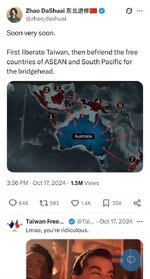
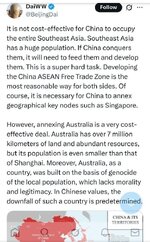
If China is so much stronger militarily as you claim, then they should stop pussy footing around, and just take Taiwan.
But China just likes making empty and hollow "paper tiger" threats as they have been since 1949. China has a long history of threats that amount to nothing....see here:


.
 
Last edited:
Since when has public opinion ever stopped a country from going to war ? Especially in asian country ? Like never,
Japan and South Korea will do as their told by their colonial masters in Washington DC, or will be threatened to lose all US "protection" against a North Korean and Chinese attacks on their countries in the future, and they will tow the line.

Heck, the whole reason the USA has been able to keep over 80,000 US troops stationed inside those 2 countries for over 80 years is specifically because of the "military threat" from China and North Korea....whether this threat is actually real or made up makes no difference. Otherwise they would have asked the Americans to close their many military bases there, and leave their troops a long time ago.

If China is so much stronger militarily as you claim, then they should stop pussy footing around, and just take Taiwan.
But China just likes making empty and hollow "paper tiger" threats as they have been since 1949. China has a long history of threats that amount to nothing....see here:


They'll do it on their own time so don't worry as the current status quo is a losing proposition for the Americans as they're burn themselves further into debt and USD power operationalizing that expensive 3 island chain. Why would the Chinese want to rush the process given this?

 
China imposes de facto rare earth embargo on Japan. While Japan has been attempting to ween off from Heavy Rare Earth reliance from China for years, theres still much work to be done but for perhaps a decade, Japan will still be 80% reliant on China on HRE which are used for defense systems including jet systems, military grade sensors, and laser systems.

I just came back from Japan snowboarding btw. Great snow. Will be back


Last edited:
Another Han Feizi analysis following RE ban on Japan and the kidnap of Maduro. This time it is comparing how China & US conducts their business within their backyard.

Note that he believes that Trump is overestimating the amount of oil that Venezuela has leveraging his former background as an oil & gas analyst.

@Caduceus you should read more of Han Feizi's articles to understand why China takes its time in making it moves.

I was actually thinking of putting this in the Venezuela thread but Han Feizi focuses on China geopolitics.

---beginning of article
The ghost of Winston Churchill is watching President Trump exhaust all of America’s possibilities. And it appears getting around to doing the right thing will have to be entrusted to the next administration – if we make it that far.

After kidnapping Venezuelan President Nicolás Maduro, President Trump is now bent on outdoing himself by committing the US to “running Venezuela”; threatening Denmark, Cuba, Nicaragua, Mexico, Canada, Colombia and Iran; increasing the Pentagon budget by 50%, to $1.5 trillion; and seizing Russian tankers.

Justifications for these actions are, in no particular order: narco-terrorism, illegal immigration, the malign presence of China/Russia/Iran, oil, rare earths, arctic security, the “Donroe Doctrine” and “Murca, f**k yeah!”

Pointing out the wobbly merits and confused means to achieve these ends is a fool’s errand. They are not meant to withstand close scrutiny. We will pull on a few loose threads for demonstration purposes but it is pointless to go through the entire litany as farces will be generated faster than they can be debunked.

The world can safely assume that President Trump is blundering and figure out why later. We are confident in this assessment as Trump’s only real motivation is the “Murca, f**k yeah!” musings of a dementia-addled narcissism. Talking heads with sudden expertise in arctic missile trajectories and oil and gas economics are trying to clothe a naked emperor. Nobody is playing 4-D chess. All of this will end in tears as it has in Vietnam, Somalia, Iraq, Libya, Afghanistan and the Red Sea.

In recent days, flying under the headlines, China announced an export restriction protocol on dual-use (commercial and military) products for Japan, including rare earths. This is surely in retaliation for Prime Minister Sanae Takaichi’s recent statement that a PLA move on Taiwan constitutes an existential threat and justifies a Japanese military response.

While verbally stating that only military uses will be affected, initial reports suggest that rare-earths exports to Japan have been broadly restricted. This is an old Sun Tzu play, “When you surround an army, leave an outlet free. Do not press a desperate foe too hard.” The lifting of export restrictions will involve Japanese concessions on its military posture towards Taiwan.

Somewhere in Trump’s brain is Venezuela’s “300 billion barrels” of oil reserves – the largest in the world. The word “reserves” is being used liberally. (Note to reader: Han Feizi is a former oil and gas analyst.)

Venezuela’s Orinoco oil belt was discovered in 1935. The country currently produces about 1% of the world’s oil (~900,000 barrels per day), a far cry from the US, Saudi Arabia, Russia and Canada, which account for 23%, 13%, 13% and 6% of the world’s output, respectively. At its peak in the 1960’s, Venezuela produced 3.5 million barrels per day – still a fraction of today’s mega producers.

While mismanagement and economic sanctions have surely hobbled production, the Orinoco Belt is also an extra heavy sour (high sulfur) deposit, difficult to extract and expensive to refine. It is basically a giant tar pit – the marginal deposits tapped after exhausting all other fields. There just is no incentive to ramp up heavy sour oil production in a low oil price environment.

Proved reserves, often called 1P, have an industry definition. This is oil in the ground with a 90% chance of being economically extractable. Reserves only become proved after significant investment has been made – drilling multiple exploration wells as well as development wells. In industry parlance, this is called “finding and development costs.” Under Serities Exchange Commission rules, US-listed oil and gas companies are only allowed to report proved reserves.

There are also 2P (proved + probable) reserves. Probable reserves have a 50% chance of being economically extractable. This is where things start to get loosey-goosey. Oil and gas companies often impute the existence of probable reserves with seismic studies (reflected soundwaves mapping underground formations) combined with a small number of exploration wells. Oil and gas companies need to spend significantly more to turn probable reserves into proved reserves.

And then there are 3P (proved + probable + possible) reserves. Possible reserves have a 10% chance of being economically extractable. These are “in our fevered imagination” reserves. Possible reserves depend as much on the persuasiveness of touts, the professional scruples (or lack thereof) of geologists and, in the case of Venezuela, the political imperatives of the Chavez/Maduro regime as they do on the actual existence of oil deposits. Venezuela’s 300 billion barrels is definitely of the 3P variety.

The R/P ratio – proved reserves over production – is a metric used in the oil and gas industry. This ratio is usually between 10 and 20. With 900,000 barrels per day of production, Venezuela would normally have an estimated 3.3 to 6.6 billion barrels of proved reserves (vs. Exxon’s 19.9 billion barrels).

Venezuela, however, is not normal because its oil fields have been mismanaged. With tens of billions of dollars in additional finding and development spending, we can put a multiple on the reserves estimated above. But no reasonable multiple will get anywhere close to the 300 billion barrels being bandied about and swirling in Donald Trump’s head. The upper limit is 30 billion barrels.

While robbing Venezuela of its oil is an economically wobbly premise, there is also a massive contradiction running through the “Trump Corollary” to the Monroe Doctrine (AKA the Donroe Doctrine) as laid out in the National Security Strategy (NSS). A central theme of the Donroe Doctrine is to stop economic migration from Latin America. Another is to eject China, Russia and Iran from the Western Hemisphere.


We will deny non-Hemispheric competitors the ability to position forces or other threatening capabilities, or to own or control strategically vital assets, in our Hemisphere.

American policy should focus on enlisting regional champions that can help create tolerable stability in the region, even beyond those partners’ borders. These nations would help us stop illegal and destabilizing migration, neutralize cartels, nearshore our manufacturing, and develop local private economies, among other things.

Latin American economies are not complementary to the US. What Latin America needs – capital and affordable capital goods – the US cannot provide. The US, by running massive trade deficits, is, in fact, fighting Latin America for China’s capital flows. What Latin America has – oil, minerals and agricultural products – the US doesn’t need thanks to plenty of its own output.

All Trump can hope to achieve is to coerce Latin American elites to align with the US while immiserating their country, sending waves of economic migrants north. Given China’s significant economic foothold in Latin America and the reluctance of President Trump to put boots on the ground, it is unclear how much he can actually coerce.


As we have pointed out, wonky analysis is pointless when it comes to President Trump. He thinks Venezuela has 300 billion barrels of reserves and there is no point arguing. He thinks Greenland is full of rare earth deposits and is vital to American security and that’s that. He thinks Latin America will be a valuable captive market for American industry and nothing will convince him otherwise.

When things inevitably do not work out as planned, Donald Trump will have moved on to a completely different circus. The circus we are currently watching is itself a distraction from having surrendered in the trade war with China and having abandoned Ukraine (not to mention a distraction from the Epstein scandal and abysmal poll numbers). Trump is just throwing things against the wall to see what sticks. And little will stick.

The kidnapping of Maduro demonstrated excellent intelligence and special operations capabilities but low resolve – there are no boots on the ground. This is not 4-D chess. Everyone from the still-intact Venezuelan regime to Denmark to China gets to respond. Threatening everyone at the same time while doing things on the cheap gets America only so far.

Quietly, in the background, China is breaking the US/Japan alliance. China has a decade-long window to play its rare-earths card before the West develops alternatives. Export restrictions on dual use products, including irreplaceable inputs like rare earths, are crippling to Japan’s economy. It should not come to that. China does not want to destroy Japan’s economy but, in the emerging spheres-of-influence world, Japan’s military must be either physically or politically hobbled.

Both China and the United States are playing the most ruthless kind of power politics. One is using power surgically, after rigorous analysis and sober consideration, while the other is throwing everything against the wall. Everyone should be cognizant which one is which before placing bets on outcomes.

---end of article

 
Last edited:
Back
Top